Penile & Testicular Pain Treatment in Hollywood, FL
Burning at the tip after you urinate, an ache along the shaft, pain at ejaculation, or months of a dull ache in the testicle and groin: when the cultures and the ultrasounds keep coming back clean, the muscles and nerves of the pelvic floor are the next thing that needs examining.
What causes penile and testicular pain?
Pain in the penis or testicle frequently is not being generated where it is felt. The pudendal nerve and its branches supply the penis, nerves through the lower abdominal wall and groin supply the scrotum, and all of them travel through or alongside the pelvic floor muscles. When those muscles are overactive and tender, they can refer pain and irritate the nerves, and the pain shows up downstream. Cultures, ultrasound and a urologist’s workup rule out infection, torsion, masses and structural disease, and those need medical management first. A clean result narrows the field. It does not close the case.
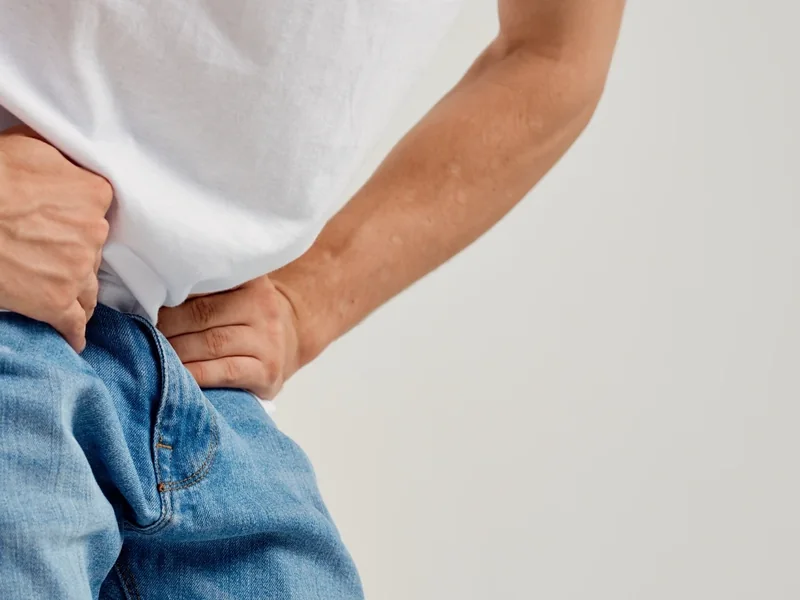
Your pelvic floor muscles are skeletal muscles, no different in kind from the muscles in your forearm. They can shorten, hold tension for months, develop tender points and refer pain away from themselves. Points in the pelvic floor and lower abdominal wall commonly refer into the tip, shaft or base of the penis and straight into the testicle and groin. Overactive muscle is physical. It can be felt, measured and treated, which is the opposite of being told nothing is wrong.
The pudendal nerve carries sensation from the penis, the perineum and the rectum, and sensation from the scrotum is carried by nerves that pass through the lower abdominal wall and the groin. Where they run through tight muscle and dense connective tissue, they can be compressed or lose their ability to glide. Nerves under that load produce burning, numbness, shooting or electric pain and hypersensitivity, often shifting with position. Restoring nerve mobility and reducing the tension around it is a specific, trainable target.
Burning during or right after urinating is often driven by pelvic floor muscles that will not release to let urine pass, then clamp down afterwards. An erection loads the pelvic floor, and ejaculation is a rapid, forceful contraction of it, so muscles that are already short and tender can make both painful, during or minutes afterwards. That is a coordination problem, and coordination is trainable.
Chronic orchialgia is the name given to testicular pain that has lasted months with no structural cause found on examination or imaging. It is a description, not a mechanism, and being handed a description can feel like the end of the road. It is not one. Persistent pain with clean imaging is precisely the presentation pelvic floor physical therapy is built for, because it assesses function rather than structure.
Pain can begin with a clear event: a direct injury, epididymitis, orchitis, torsion, or surgery in the pelvis or groin. Those need medical care first, and torsion needs it immediately. What gets missed is the aftermath. Scar tissue does not glide the way healthy fascia does, restricted tissue moves less blood through it, and the guarding pattern that protected you during the acute episode often outlasts the healing.
Pain that has lasted months changes the system reading it. The nervous system turns up its gain, the muscles stay braced in anticipation, and you begin sitting, moving and having sex defensively without deciding to. Long hours seated and a habitually tucked pelvis keep that tension in place. None of that means the pain is invented. It means a second driver is now stacked on the first, and both need addressing.
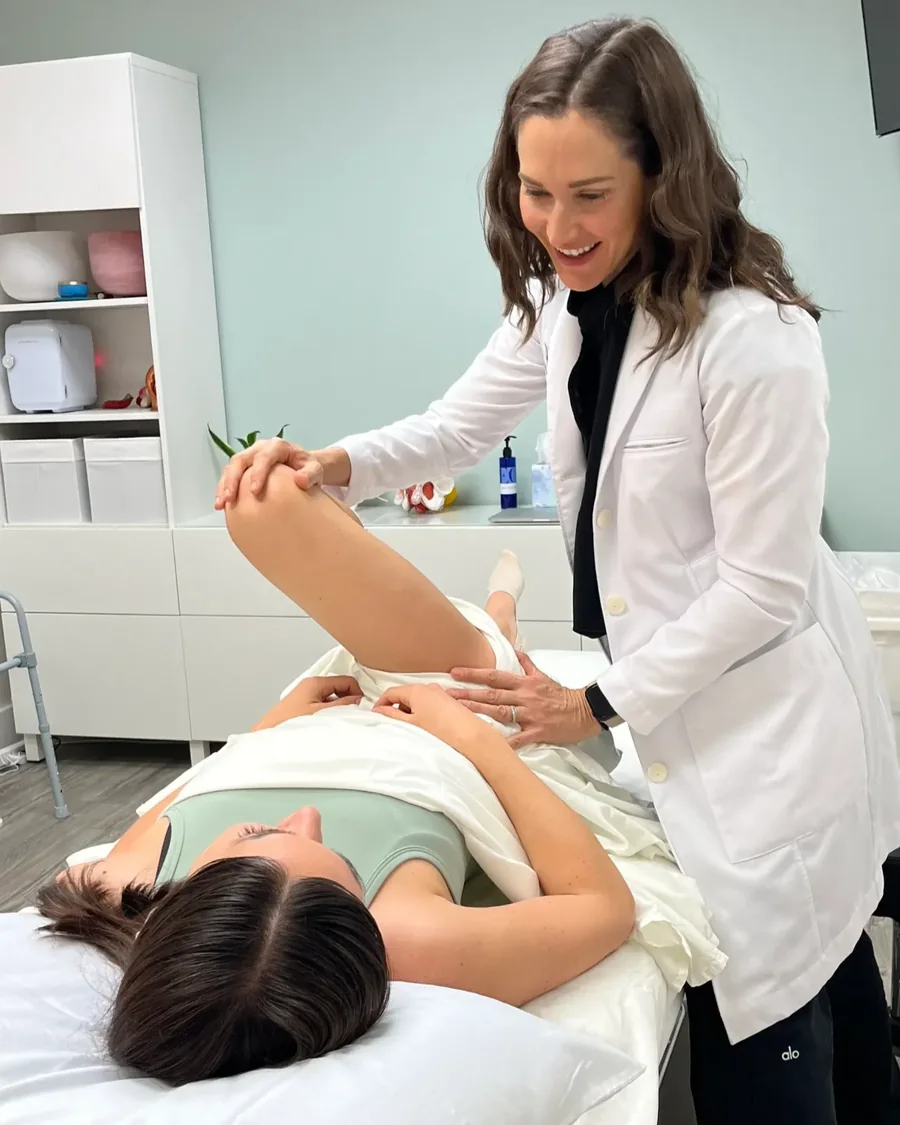
How physical therapy in Hollywood helps.
Cultures, imaging and a urologist’s workup are how infection and structural disease get ruled out. That work is necessary and nothing here competes with it. What it cannot report is whether a muscle releases on command or whether a nerve still glides, because there is no scan for either. Those get assessed by hand, and this is a non-surgical approach throughout.
Assessment of the male pelvic floor may include an internal rectal examination, since palpating those muscles directly is the only way to find the tender points that refer into the penis and testicle. Your therapist explains exactly what is involved and why, before anything happens. You decide whether it happens, you can decline any part of it, and you can stop at any point in any session. Consent is continuous and it is yours.
Treatment then follows what the exam found. Manual therapy, myofascial and connective tissue release reduce restriction and improve circulation across the abdomen, groin, inner thigh, glutes and low back. Down-training and breathing restore the resting length of a pelvic floor that has forgotten how to let go. Nerve mobility work restores glide. Posture and hip work take the sustained strain off. Then coordination, strength and endurance rebuild normal function for sitting, urination, erection and ejaculation. If erections have also changed, erectile dysfunction is assessed at the same visit.
Sessions run 30 to 60 minutes, one on one, in a private room with the door closed. Florida is a direct-access state, so no physician referral is needed to book.
What to expect.
Evaluation
You describe it in your own words, in a private room with the door closed: where it hurts, when, whether it moves, and everything already ruled out. Then a physical assessment of the pelvic floor, abdominal wall, hips, posture and breathing mechanics, explained before each step. You leave with a working explanation and a plan.
Calm it down
The first phase lowers tone and improves circulation. Manual therapy, myofascial release and down-training bring an overactive pelvic floor back toward resting length and settle the tender points referring into the penis and testicle, and nerve mobility work restores glide. You get a short home program, because what happens between visits sets the pace.
Rebuild function
Then coordination, strength and endurance, so the pelvic floor releases and contracts without pain through a full day of sitting, standing and lifting. No honest clinician can hand you a date. Most people notice change within a few weeks when they keep up the home work, and your therapist will describe your case at the evaluation.
My wife and I can't thank Dr. Leslie enough for everything she's done for us.
Pelvic pain rarely stays in one place.

Erectile Dysfunction
A blood-flow and muscle-function problem that responds to physical treatment.
Post-Prostatectomy Rehab
Bladder control and erectile recovery after prostate surgery, ideally started before it.
Pelvic Pain
Pain in the pelvis, groin, genitals or lower abdomen that imaging keeps calling normal.