Erectile Dysfunction Treatment in Hollywood, FL
If the bloodwork is normal and the scans are clean and nobody has yet examined the muscles that actually hold an erection, then the workup is not finished, and this is the part that is still missing.
What causes erectile dysfunction?
An erection depends on three things happening together: blood flowing into the penile tissue, nerves carrying the signal, and pelvic floor muscles contracting to hold that blood in place. Imaging and bloodwork are built to rule out structural and vascular disease, and that matters. They are not built to measure whether a muscle can contract on command or release fully. When the scans come back clean, muscle and nerve function is the next place to look, and it can be examined by hand.

An erection is a blood flow event before it is anything else. Vascular disease, high blood pressure, diabetes, high cholesterol, heart disease and carrying extra weight all reduce how much blood reaches the tissue and how well it stays there. Smoking, alcohol and long stretches of inactivity add to it. This is the layer your physician screens first, and it is also the layer shockwave and SoftWave therapy work on directly.
Your pelvic floor muscles are skeletal muscles. Same kind of tissue as your calf or your jaw, and subject to the same problems. They can sit shortened and guarded for months without you ever noticing them. A pelvic floor held at high tone compresses the vessels and nerves running through it, which restricts the blood flow an erection depends on. Tension is not strength. A muscle that will not let go cannot generate force on demand either.
Specific muscles at the base of the penis contract to raise internal pressure and keep an erection firm. If they are weak, or if they fire late and out of sequence with your breathing and abdominal wall, an erection can start and then fade. Coordination is a separate problem from strength, and being able to squeeze hard proves nothing about timing. Both are measurable, and both respond to training.
Erectile dysfunction is a recognized side effect of a number of common prescriptions. If your symptoms started within weeks of a new medication, that belongs in a conversation with the physician who prescribed it, and physical therapy does not replace that conversation. What happens here runs alongside it: the muscle, tissue and circulation side gets addressed while your medical team handles the prescribing.
Stress, anxiety and low mood change muscle tone. A nervous system stuck in a defensive setting keeps the pelvic floor braced, and bracing is exactly the state that restricts blood flow. A few difficult episodes then add anticipation to the picture and the bracing gets worse. Calling this physical is not the same as calling it imaginary. It means the path from stress to symptom runs through muscle, and muscle is trainable.
Trauma to the pelvis, groin or perineum, prostate problems, and surgery anywhere in the region all leave changes behind. The tissue heals, but the guarding pattern that protected you during healing tends to stay, and scar tissue does not glide the way healthy fascia does. Restriction across the abdomen, groin, glutes and low back changes how the pelvic floor loads and how freely blood moves through it.
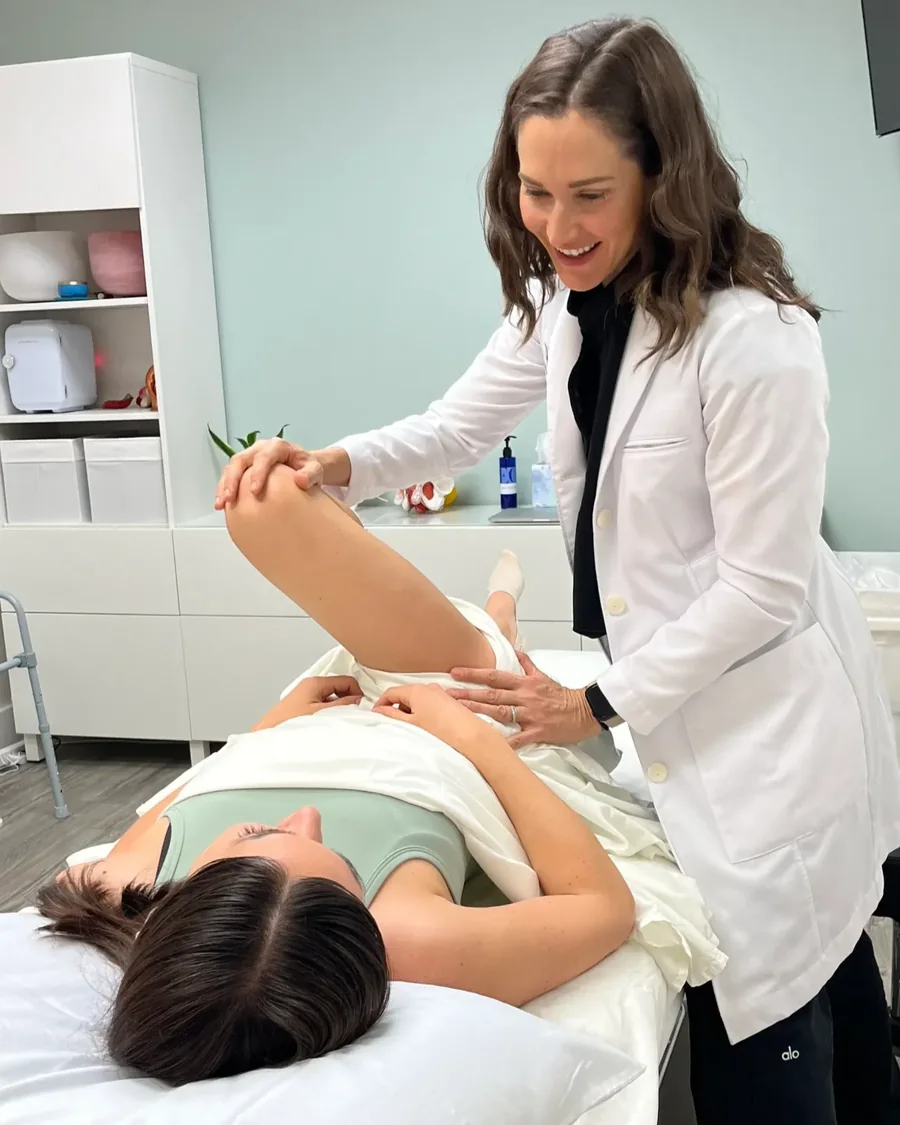
How physical therapy in Hollywood helps.
Imaging and a urologist's workup are how structural and vascular disease get ruled out. That step is necessary and a clean result is good news. It also leaves one question open, because no scan reports whether a muscle can release on command. That question gets answered by hand, at the evaluation.
Assessment of the male pelvic floor may include an internal rectal examination, because palpating those muscles directly is the only way to feel where they are short, tender or firing out of sequence. Your therapist explains exactly what is involved and why, before anything happens. You decide whether it happens, you can decline any part of it, and you can stop at any point in any session. Consent is continuous and it is yours.
Treatment then works the layers the exam found. Manual therapy and connective tissue release reduce restriction across the abdomen, inner thigh, groin, glutes and low back. Down-training teaches an overactive pelvic floor how to lengthen again. Targeted strengthening and endurance work rebuild the contraction that maintains an erection, trained with your breath rather than in isolation. Shockwave and SoftWave therapy work the vascular layer, delivering acoustic waves to the tissue to stimulate capillary density and new blood vessel growth, with no medication and no injection involved. If penile pain or a chronic ache in the testicle and groin is part of your picture, it gets assessed at the same visit.
Sessions run 30 to 60 minutes, one on one, in a private room with the door closed. Florida is a direct-access state, so no physician referral is needed to start.
What to expect.
Evaluation
History first, in a private room with the door closed: when it started, what changes it, and everything that has already been ruled out. Then a physical assessment of pelvic floor strength and release, tissue quality, posture and breathing mechanics, explained before each part of it. You leave knowing what your therapist found.
Release and down-train
Early sessions bring tone down before anything gets strengthened. Manual therapy and connective tissue release free up restriction through the groin, abdomen and glutes, and you learn to let the pelvic floor lengthen instead of gripping. If shockwave or SoftWave therapy is part of your plan, it starts here.
Rebuild and load
Then the rebuild: strength, endurance and coordination for the muscles that support an erection, trained with your breath rather than in isolation. You go home with a program that fits your week. Nobody can honestly hand you a date, and your therapist will describe your case at the evaluation.
My wife and I can't thank Dr. Leslie enough for everything she's done for us.
The same muscle group, different symptom.
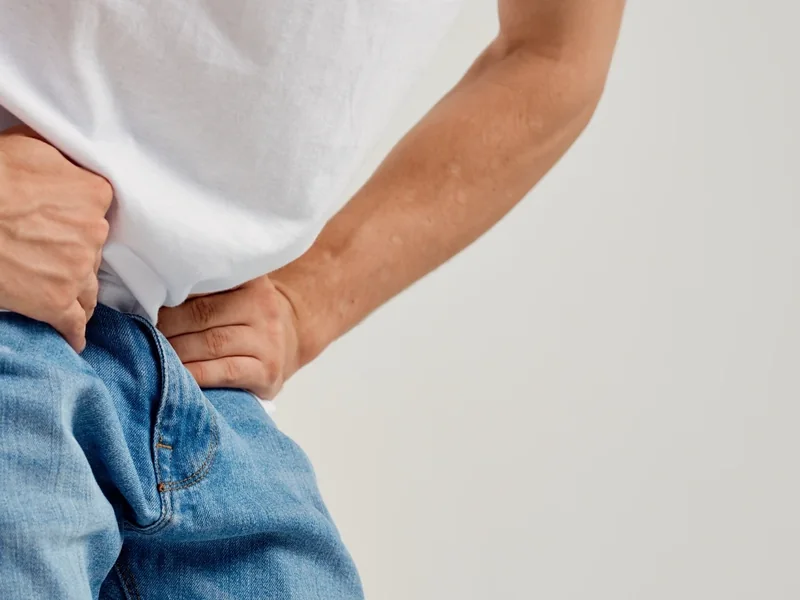
Penile & Testicular Pain
Pain in the penis, testicle or groin when cultures and ultrasounds keep coming back clean.

Sexual Dysfunction
Pain, difficulty or loss of function, examined as a physical problem.
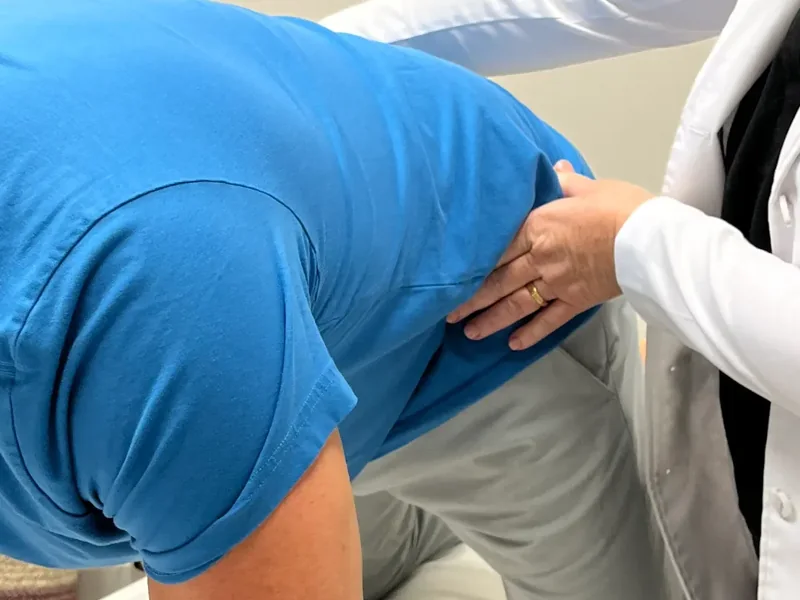
Post-Prostatectomy Rehab
Bladder control and erectile recovery after prostate surgery, ideally started before it.