Menopause Treatment in Hollywood, FL
Nobody warned you that the leaking, the tendon aches and the strength that quietly left would arrive alongside the hot flashes, and being told it is your age is not an answer.
What causes menopause symptoms?
Menopause is not only hot flashes. As estrogen falls, tissue all over the body changes at the same time: bone, muscle, tendon, and the pelvic floor. That is why the symptoms arrive as a cluster and rarely make sense one at a time. Naming the driver behind each one is what turns a confusing decade into something you can actually treat.
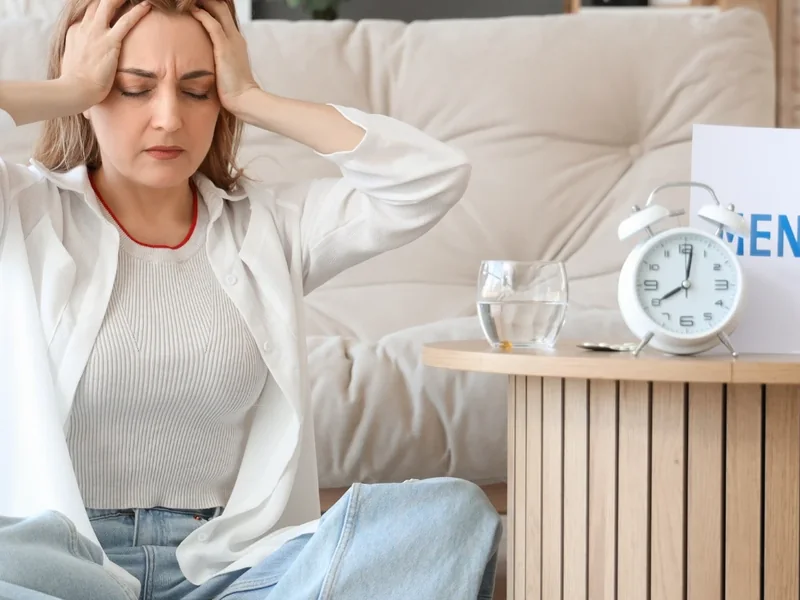
Estrogen does far more than regulate a cycle. It keeps connective tissue supple, helps muscle hold on to strength, and supports the tissue of the bladder, the vagina and the pelvic floor. When it declines, all of that shifts at once. Aches appear in places that never used to hurt, healing slows down, and a body that always responded to exercise stops responding the same way. None of that is imagined, and none of it is a discipline problem.
Bladder control is one of the most common and least discussed parts of this transition. The pelvic floor supports the bladder and the urethra, and when the tissue thins and the muscles lose their timing, leaking shows up with a cough, a sneeze, or on the walk from the car to the front door. More Kegels are not the answer if those muscles are already gripping. Coordination has to be retrained, not forced.
Lower estrogen is strongly linked to tendon degeneration, tendinitis and slower tissue repair, which is why new tendon pain often turns up in your forties and fifties with no injury behind it. Hips, knees, shoulders and ankles are common sites, and recovery from ordinary activity takes longer than it used to. The tendon has not failed you. It has become less tolerant of load, and load tolerance can be rebuilt deliberately.
Bone is living tissue that responds to what you ask of it. As estrogen drops, the balance tips toward loss, and the spine and hip are the sites that matter most. Weight-bearing and resistance work are the main lever you have, and they need to be prescribed properly rather than guessed at, particularly if your pelvic floor is already symptomatic and lifting anything heavy makes you leak.
Strength and muscle mass fall away faster through this decade, and balance quietly goes with them. That combination is what turns a small trip on an uneven sidewalk into a fracture. Balance is not a fixed trait you either have or do not. It is a trainable skill built out of ankle, hip and trunk control, and it responds to specific practice at any age.
Night sweats fragment sleep, and a nervous system running on broken sleep reports pain louder. That is part of why joints feel stiffer in the morning, why mood is harder to hold steady, and why a flare feels less tolerable than the same flare would have five years ago. Sleep habits, breathing and paced movement all belong in the plan, because they change how much pain your system produces.
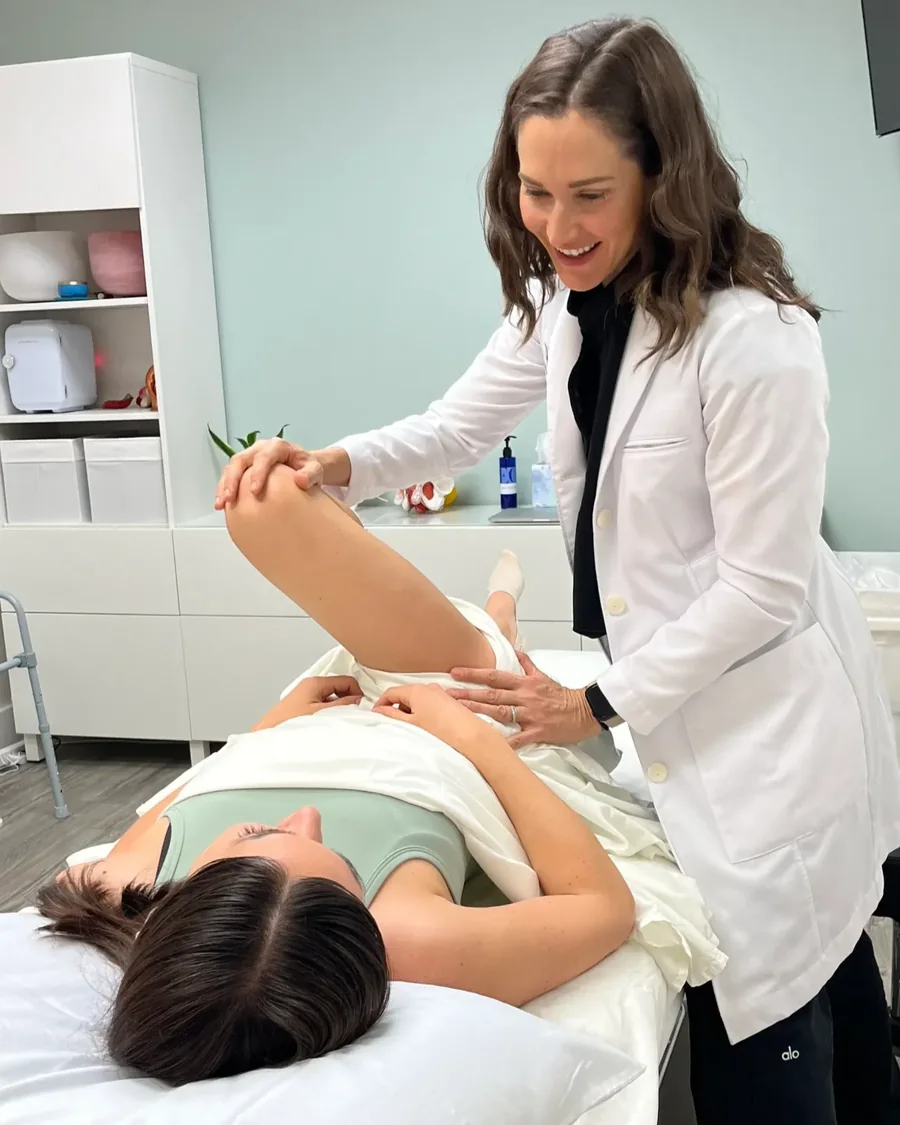
How physical therapy in Hollywood helps.
Physical therapy is a non-hormonal way to work on the parts of menopause that are mechanical: bladder control, pelvic floor coordination, tendon tolerance, bone loading, strength and balance. It does not replace anything you and your physician decide about hormones, and it does not have to wait on that decision either. In Florida you can start without a physician referral, so no gatekeeping appointment stands between you and an evaluation. That evaluation is one on one with a licensed pelvic health therapist in a private room, and it looks at the whole picture: how you breathe, how you load, what the pelvic floor does under pressure, what your day actually asks of you. From there the plan runs in order. Calm what is irritated. Restore the mechanics. Then load it, because loading is the part that protects bone and rebuilds tendon tolerance, and it is the part most women are never given. Nobody can honestly promise you a date, and we will not invent one. Most people start noticing change within a few weeks when they keep up the home program, and your therapist will give you a realistic picture of your own case at the end of the first visit. If you want to know what your visits will cost before you commit to anything, call (954) 842-3825 and ask for Ronda.
SoftWave for menopause-related muscle and joint pain
The hormonal shift of perimenopause and menopause affects tendons, joints and muscles as well as the pelvic floor, and many women notice new aches during the transition: hip and buttock pain from irritated gluteal tendons, a stiff and painful shoulder, heel pain first thing in the morning, sore knees and a back that tightens up more easily. SoftWave is an unfocused, low intensity shockwave device that spreads acoustic energy broadly through the tissue rather than concentrating it at one point. It increases blood flow, stimulates cellular repair, helps tight or overactive muscles let go and reduces nerve sensitivity, which makes it a useful addition when a sore tendon or a stubborn trigger point has not settled with hands-on work and loading alone. It is always paired with your strengthening program, because load is what keeps tendon and bone healthy once the pain settles. Read more about SoftWave therapy, including the situations where it is not suitable.
What to expect from your care.
Evaluation
Thirty to sixty minutes, one on one, in a private room with the door closed. Your therapist takes a full history, screens strength, balance, tendon tolerance and pelvic floor function, then explains what she found. Any internal assessment is described first, and whether it happens is your decision.
Calm and restore
Early sessions settle what is irritated and get the mechanics working again. Hands-on work for sore tendons and gripping pelvic floor muscles, breath and pressure retraining, and mobility you can actually use. You leave each visit knowing what to practise at home and why it matters.
Load and keep it
Then we load. Progressive resistance work for bone and muscle, balance training that fits into your week, and pelvic floor coordination under real effort, so a sneeze or a heavy grocery bag stops being an event. You finish with a program that holds after you are discharged.
I recently had the pleasure of working with Leslie, and I couldn't be more grateful for the experience. From the moment we met, Leslie's warmth and genuine care put me at ease.
Pain rarely travels alone.
Urinary Urgency
The sudden, urgent need to go, even when your bladder is nearly empty.
Pelvic Organ Prolapse
Heaviness, bulging or pressure. Support is trainable, and surgery is not the only path.

Sexual Dysfunction
Pain, difficulty or loss of function, examined as a physical problem.