Biofeedback Therapy in Hollywood, FL
Your pelvic floor works out of sight, which is why guessing at it rarely fixes anything, so EMG biofeedback puts the muscle on a screen and shows you what it is actually doing.
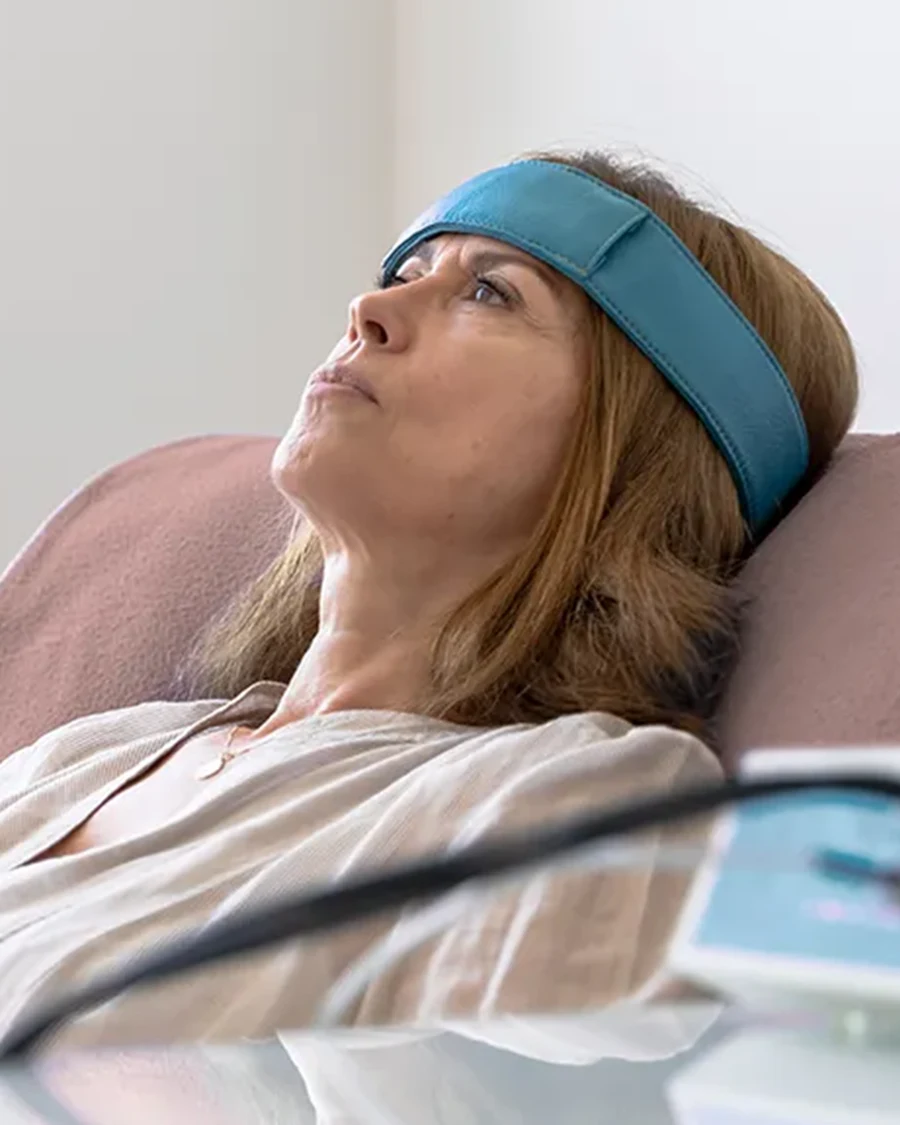
What is biofeedback therapy?
Pelvic floor EMG biofeedback measures the electrical activity of your pelvic floor muscles and gives it straight back to you, as a line moving on a screen or a tone you can hear. A small sensor picks up the signal while you contract, relax and coordinate. Nothing is sent into the muscle. The sensor only listens. What changes is that a muscle you have never once been able to see suddenly has a readout, in real time, in front of you.
That matters because most pelvic floor patterns are automatic. You may have been doing Kegels with the wrong muscle, or holding your breath through every one, or squeezing something that already will not let go. The screen settles that question in about thirty seconds. It also shows the opposite problem, a floor that cannot switch off, which sits underneath a great deal of pelvic pain, constipation and dyssynergia. Pelvic specific biofeedback is clinically supported for that kind of work. It is a pelvic tool only, and we do not use it for blood pressure, sleep or general stress. Florida is a direct access state, so no physician referral is needed to begin.
Who it's for.
Biofeedback earns its place when the problem is coordination rather than effort. Your therapist decides at the evaluation whether a readout would tell us something that hands alone cannot.
You leak, and Kegels have not helped
Urinary leakage. Bowel leakage. Postpartum weakness that nobody followed up on. You have been squeezing for months with nothing to show for it. The screen shows whether you are recruiting the right muscle, how long you can hold it, and how fast it lets go, so your therapist can correct the pattern instead of asking you to try harder.
The floor will not relax
Pelvic pain driven by overactivity, tightness or spasm. Constipation, and that sense of pushing against a door that is already shut. When a pelvic floor will not release, more strengthening makes it worse. Biofeedback gives you a target to work down toward and a visible signal at the moment the muscle finally lets go.
The timing is off, not the strength
Dyssynergia, where the floor contracts when it should be releasing. Muscle dysfunction that travels with prolapse. Pressure that arrives faster than the muscle answers. These are timing faults rather than strength faults, and timing is very hard to feel from the inside. Watching the trace while you practice is the quickest way to retrain it.
What to expect at your session in Hollywood.
Sessions run 30 to 60 minutes, one on one, in a private room with the door closed. Nothing happens before it has been explained to you.
Sensors, explained first
Your therapist talks through the sensor options before anything is placed. EMG sensors can be internal, vaginal or rectal, or external on the skin when internal assessment is not appropriate or not needed. You stay covered, you have privacy and time to change, and you decide. Consent is continuous and you can stop at any point.
Reading your own muscle
You see a live trace, hear a tone, or both. Your therapist asks you to contract, hold, release, cough and bear down while you watch what the signal does. This is quiet seated work, not exertion. Most people find the first minute strange and the next ten genuinely useful, because the guessing stops.
Training against the feedback
Once you can see the pattern, you practice changing it: lengthening a floor that grips, recruiting one that is slow, timing the response to pressure. That gets paired with hands-on work, bladder or bowel retraining, and home strategies so the new pattern holds between visits rather than leaving with your therapist.
Biofeedback is low risk, and internal sensors are never a requirement. Tell your therapist beforehand if you are pregnant or think you may be, if you have an active vaginal, urinary or rectal infection, an unhealed tear, incision or open wound in the area, recent pelvic surgery, an active malignancy in the pelvis, or a latex allergy. Any of these may mean external sensors instead, or waiting a while. We would rather know first.
I am absolutely thrilled with Dr. Leslie! She is far more than just a pelvic floor therapist, her exceptional care, extensive knowledge, and expertise have been truly transformative.
Where to go next.
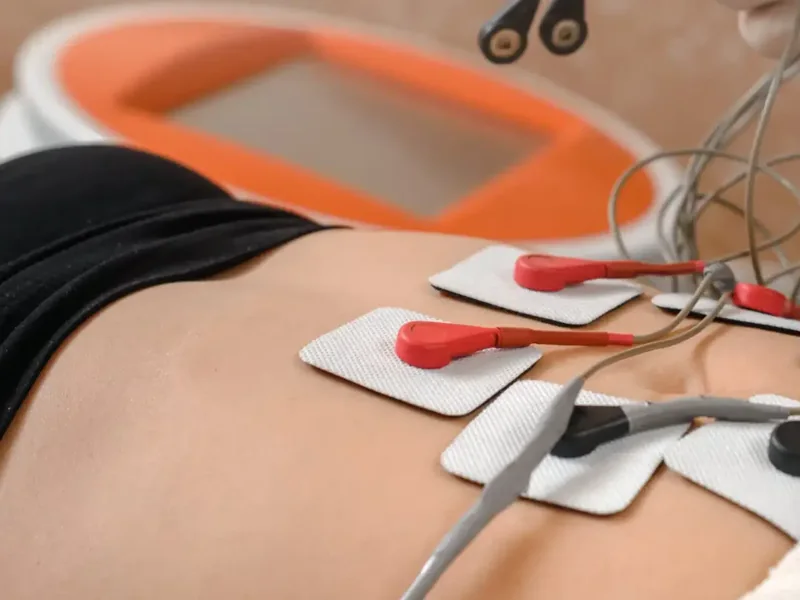
Electrical Stimulation
Gentle current to wake up muscles that have stopped responding on their own.
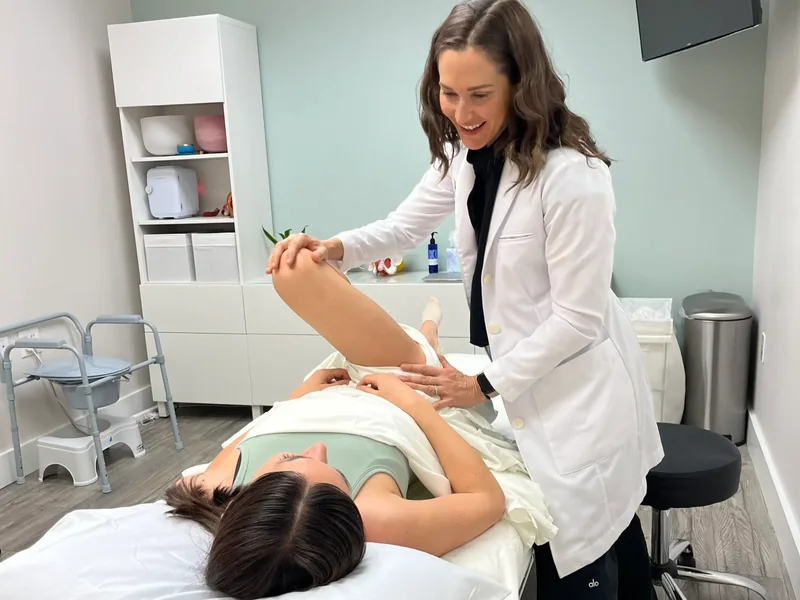
Pelvic Floor Therapy
Internal and external work to retrain muscles you were never taught to feel.

Bladder & Bowel Dysfunction
Urgency, leaking, incomplete emptying and straining, all from the same muscles.