Manual Therapy in Hollywood, FL
You have stretched it, rested it, and waited it out. Some joints and some tissue will not let go until a trained pair of hands moves them for you.

What is manual therapy?
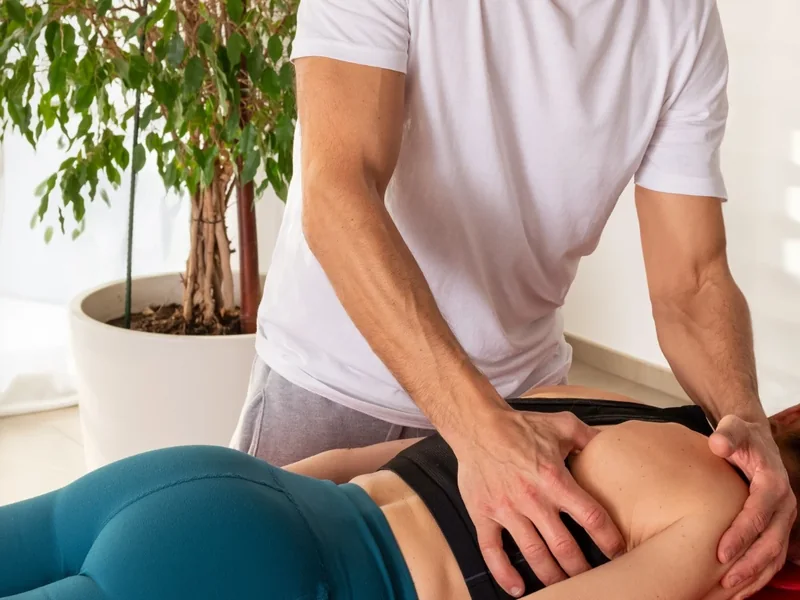
Manual therapy is the hands-on half of physical therapy, and here it is aimed at the structures that surround your pelvic floor: the hips, the sacroiliac joints, the tailbone, the low back, the abdominal wall. The defining feature is that your therapist does the moving. You stay still while a stiff joint is taken through the small range it has lost, while tight tissue is glided in the direction it refuses to go on its own, or while gentle traction takes pressure off an irritated joint or nerve. It is not a fixed routine. Your therapist feels for what is restricted, treats it, then feels again to see what changed, and that reassessment is why no two of your visits will look the same. Joint mobilization, soft tissue mobilization, fascial work and neuromuscular re-education all sit under this one heading, and which of them you get depends on what the hands find that day.
This is treatment, not relaxation. Visits run 30 to 60 minutes, one on one, in a private room with the door closed, and everything is explained before a hand goes anywhere near you. Where the pelvic floor itself needs assessing, that may involve internal work. It is described first, and it is yours to decline or stop at any moment. Florida is a direct-access state, so no physician referral is needed to begin. If you want to know what your visits will cost before you commit to anything, call (954) 842-3825 and ask for Ronda.
Who manual therapy in Hollywood helps.
This is for the joints and tissue that have not answered to rest, stretching, or another round of Kegels. If something around your pelvis, hips, or low back feels stuck, braced, or locked, this is the part of your visit that goes after it.
Stiff hips holding the pelvic floor down
Your back scan came back clean, so you stopped asking about it. But your hip catches when you stand up out of the car, the ache sets in by mid afternoon, and your pelvic floor never truly switches off. Hips and sacroiliac joints that will not glide keep those muscles braced. Mobilizing the joints is often what finally lets the floor release.
Guarding that outlasted the injury
The tear healed. The surgery healed. Your body never got the message, so it still holds everything tight around the area as though the threat is ongoing. Manual therapy reintroduces movement at a pace your nervous system reads as safe, and for people whose pain has sat unchanged for months, that is often the visit where something finally shifts.
An abdominal wall that stopped gliding
After a c-section, a perineal repair, or abdominal surgery, tissue heals in layers that no longer slide over one another. You feel it as pulling, as numbness above the scar, or as pressure low in your belly the moment you lift something. Soft tissue mobilization restores the glide between those layers so your abdominal wall and pelvic floor can share load again.
What to expect in a session.
Every visit opens with hands assessing rather than treating. What your therapist finds in the first few minutes decides what the rest of the hour looks like.
Finding the restriction
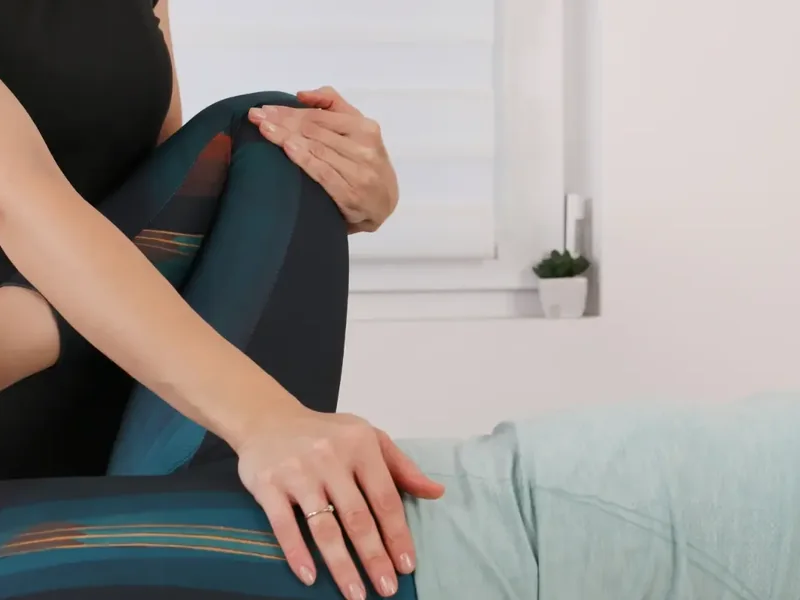
You describe what limits you and what you have already tried, in your own words and without being hurried. Then your therapist moves your hips, spine, and pelvis by hand, feeling for the joint that will not glide and the tissue that will not lengthen. You hear what they found before anything is treated.
The hands-on work
You lie still while your therapist mobilizes the joint or works the tissue. Expect firm, specific pressure and a stretch that can be tender in the spot that was already sore. It should never be sharp, and one word from you stops it. Most people describe the feeling afterwards as loose and slightly heavy.
Using the range you got back
Before you leave, you use the movement that has come back: a couple of positions, a breath pattern, one simple exercise. Range you do not use, you give back. Mild achiness for a day or so is normal, much like the feeling after unfamiliar movement, and your report on it shapes the next visit.
Manual therapy is not a spa massage, and it is not your whole treatment plan. It opens a door. The strength and coordination work that follows is what holds the door open, which is why nobody here will hand you an hour on a table and call that a plan. Wear something comfortable enough to move in and easy to work around, and tell your therapist how the days after a session went, because that feedback changes what happens next.
I have had the pleasure of working with both Dr. Leslie and Tanya who were both incredibly knowledgeable and always made me feel super comfortable.
Where to go next.
Myofascial Release
Sustained pressure that releases the fascia holding your pain pattern in place.

Structural Integration
Whole-body fascial work that changes how you stand, not just how you feel today.
Pelvic Pain
Pain in the pelvis, groin or genitals that imaging keeps calling normal.