Coccydynia Treatment in Hollywood, FL
Your imaging came back clean, the cushion has changed nothing, and so far nobody has actually assessed the joint that hurts.
What causes coccydynia?
Coccydynia names pain at the coccyx, the small bone at the base of the spine where it meets the sacrum. That is a location, not a cause. The coccyx is not the inert stub it gets described as: it carries part of your weight when you sit, it is built to move at the sacrococcygeal joint, and pelvic floor muscles attach directly to it. Pain there traces back to a short list of mechanisms.

A fall onto the base of the spine, a hard landing on a step or a curb, an impact taken in a seated position. The force drives straight through the sacrococcygeal joint and can bruise it, sprain its ligaments, or leave the bone sitting deviated. Imaging frequently reads as normal afterwards, because a joint can be irritated and badly positioned without ever being fractured. The problem is mechanical, and mechanical problems are assessable by hand.
During delivery the coccyx has to move backwards to let the baby pass, and the sacrococcygeal joint and its ligaments take genuine load doing it. If the joint is left stiff, hypermobile or off center afterwards, sitting becomes the symptom. This can show up immediately or surface months later, and it gets missed constantly, because postpartum tailbone pain is filed under normal recovery when it is a joint problem with a name.
The joint between the sacrum and the coccyx should flex as you sit and extend again as you stand. When it stiffens, or moves too freely, or deviates to one side, load stops distributing evenly across it and the surrounding tissue stays irritated. This is the mechanism external treatment rarely reaches, and it is why your therapist assesses the position and the available motion of the joint directly rather than treating the area as a lingering bruise.
Several pelvic floor muscles attach directly onto the coccyx. When they hold high resting tension, they exert a constant pull on the bone, and pain can persist long after any original injury has healed. It runs in both directions: the muscles can drive the coccyx pain, and coccyx pain can drive protective guarding in the muscles. Assessing and releasing that tension is central to coccydynia care rather than an optional extra.
The coccyx is meant to share seated load with the sitting bones. Long hours in an office chair, a car seat or a soft couch, particularly with the pelvis tipped backwards, shift more of that load onto the coccyx itself. Sustained compression irritates the joint and the tissue around it. It is also why a cushion can reduce symptoms for a while without touching what is causing them.
The coccyx does not work in isolation. Pelvic asymmetry, restricted hip motion and the way your lumbar spine takes load all change the angle at which the coccyx is loaded. When pain has run for months, the original driver often sits somewhere in that chain rather than at the bone, which is why a proper assessment covers pelvis, hips, spine and pelvic floor before anyone goes near the coccyx.
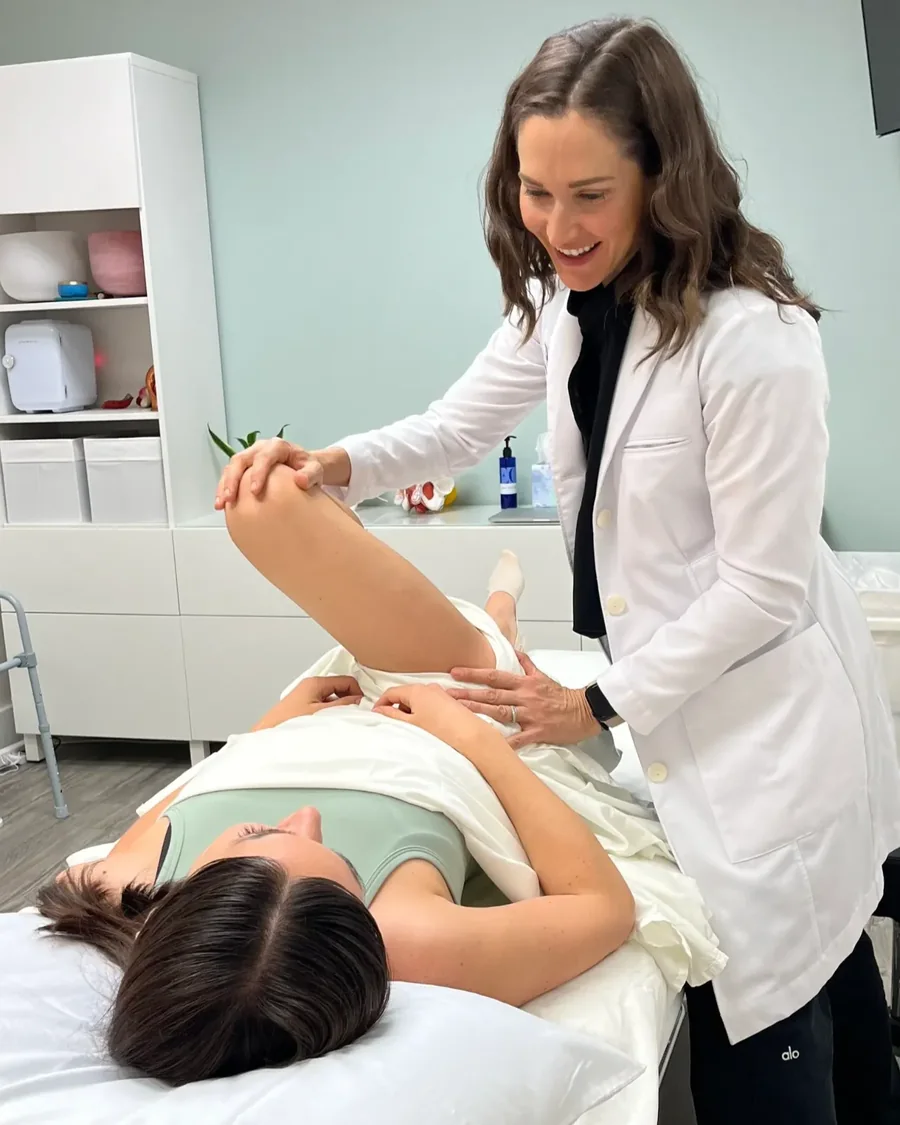
How physical therapy in Hollywood helps.
Coccydynia is one of the conditions pelvic health physical therapy is genuinely well suited to, and one of the least likely to be assessed properly anywhere else. Your evaluation covers pelvic alignment, hip and lumbar mechanics, the soft tissue surrounding the coccyx, and the position and mobility of the sacrococcygeal joint itself. Treatment follows from what is found. Manual therapy and myofascial release reduce tension in the tissue attaching to the coccyx and free up the structures loading it. Where it is indicated, coccygeal mobilization is performed internally, because that is the only route by which the joint can be reached and its position influenced directly. That is stated plainly here for a reason. It is explained to you in full beforehand, it is never a surprise, and consent is continuous and yours to withdraw at any moment without explanation. Sessions run 30 to 60 minutes, one on one, in a private room with the door closed. Nobody will hand you a date for being pain free, but most people begin noticing change within a few weeks when they keep up the home program. If you would rather read this in plain language, tailbone pain covers the same condition without the terminology.
What to expect.
Assessment
Your therapist takes a full history, then assesses pelvic alignment, hip and lumbar movement, the tissue around the coccyx and the joint itself. The aim is to name the mechanism: joint, muscle, alignment, or pain referred from elsewhere. You leave the first visit knowing what is actually driving it.
Manual and coccygeal work
Treatment starts with tissue. Myofascial release and manual therapy through the pelvic floor, glutes and posterior pelvis lower the pull on the bone. Where the joint itself is the driver, coccygeal mobilization is performed directly, explained beforehand, and stopped the moment you say so.
Load and prevention
Then we change how the coccyx is loaded. Sitting strategy, pelvic and hip mobility, and progressive strength through the trunk and hips so the joint stops absorbing what the rest of you should be sharing. You leave with a home program and a way to catch a flare early.
I recently had the pleasure of working with Leslie, and I couldn't be more grateful for the experience. From the moment we met, Leslie's warmth and genuine care put me at ease.
Pain rarely travels alone.

Tailbone Pain
Pain sitting through a drive, a meeting or a meal, often after a fall or a birth.
Pelvic Pain
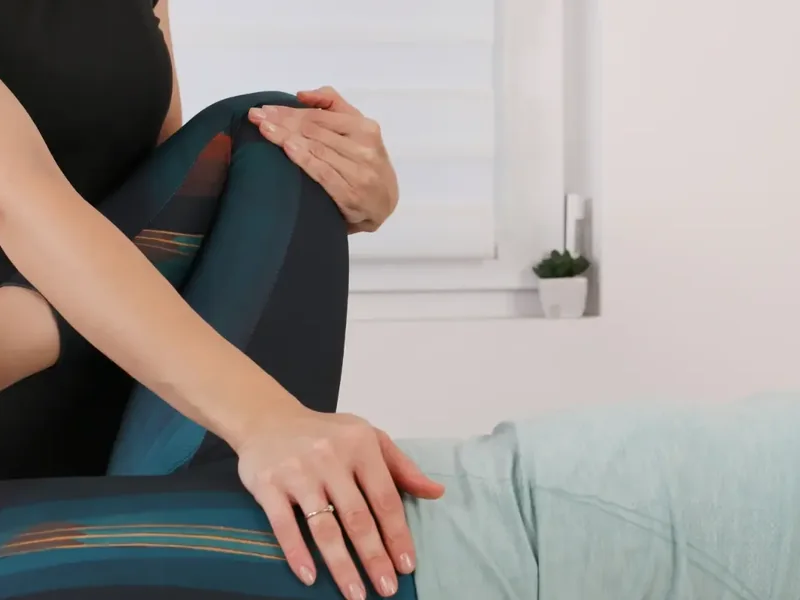
Pain in the pelvis, groin or genitals that imaging keeps calling normal.
Postpartum Recovery
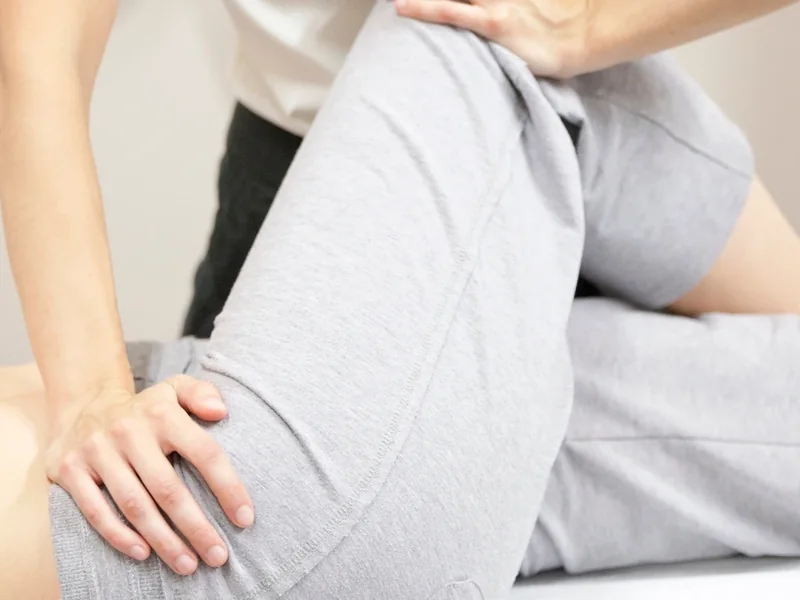
Six weeks and cleared is not the same as recovered. This is the rest of it.