C-Section Recovery in Hollywood, FL
A cesarean is major abdominal surgery, and if the shelf above your scar still feels numb, tight or not quite yours months later, nobody should have told you to accept it.
What causes C-section recovery problems?
A cesarean cuts through skin, fat, fascia, muscle layers and the wall of the uterus, and then those layers are closed and left to knit. Almost every piece of advice you were given afterwards was about the wound closing. Very little of it was about what happens to the tissue underneath once it has, and that is exactly where the pain, the tightness and the numbness live.
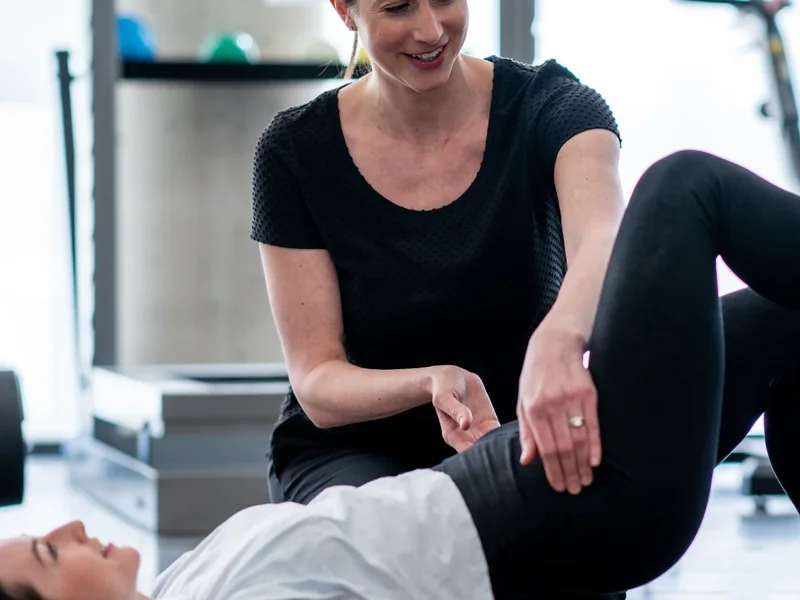
Healing tissue lays down collagen in a disorganized mesh rather than in the neat lines of what it replaced, and it can bind layers together that are supposed to glide past each other. That is an adhesion. It shows up as a pull at the incision when you reach overhead, a tug when you try to stand up straight, a tightness that feels like something is anchored down, and pain in places nowhere near the scar itself.
Small nerves that carry sensation to the skin of the lower abdomen run straight through the incision line, and some of them are cut. The result is a band above the scar that feels numb, dull, or oddly not yours, often with a firm shelf of tissue sitting over it. Some women get the opposite, where a waistband or a light touch is painful. Both are sensation problems, and both respond to graded desensitization.
Fascia is the continuous sheet that wraps and connects muscle, and it transmits force from the ribs down to the pelvis. Cut it and scar it in one place and the whole system loses some of its slide. That is how a low abdominal incision ends up producing hip tightness, low back pain, or a rib cage that will not rotate. Restoring that glide often relieves pain a long way from the scar.
The abdominal wall was separated to reach your baby, and afterwards the deep muscles are often quiet, hard to feel, and slow to switch on. Add the separation pregnancy had already created and the brace that stabilizes your trunk is missing. You feel that as low back pain, a pelvis that feels unreliable, doming down the midline, or a sense that your middle is no longer connected to the rest of you.
A cesarean does not spare the pelvic floor. Those muscles carried the weight of the pregnancy, and they are part of the same pressure system as the abdominal wall and the diaphragm. Leaking, urgency, a heaviness low down, or painful sex are all common after a surgical birth, and they are not evidence that something went wrong in theatre. They are a pressure and coordination problem.
Persistent cramping, spasm, burning or shooting pain around the scar and into the groin usually means the nerves and connective tissue in that area are still irritated rather than permanently damaged. Nerve glides and myofascial work bring that irritation down. It is also why long stretches of rest tend to make things worse: this tissue needs graded, progressive movement, not stillness.
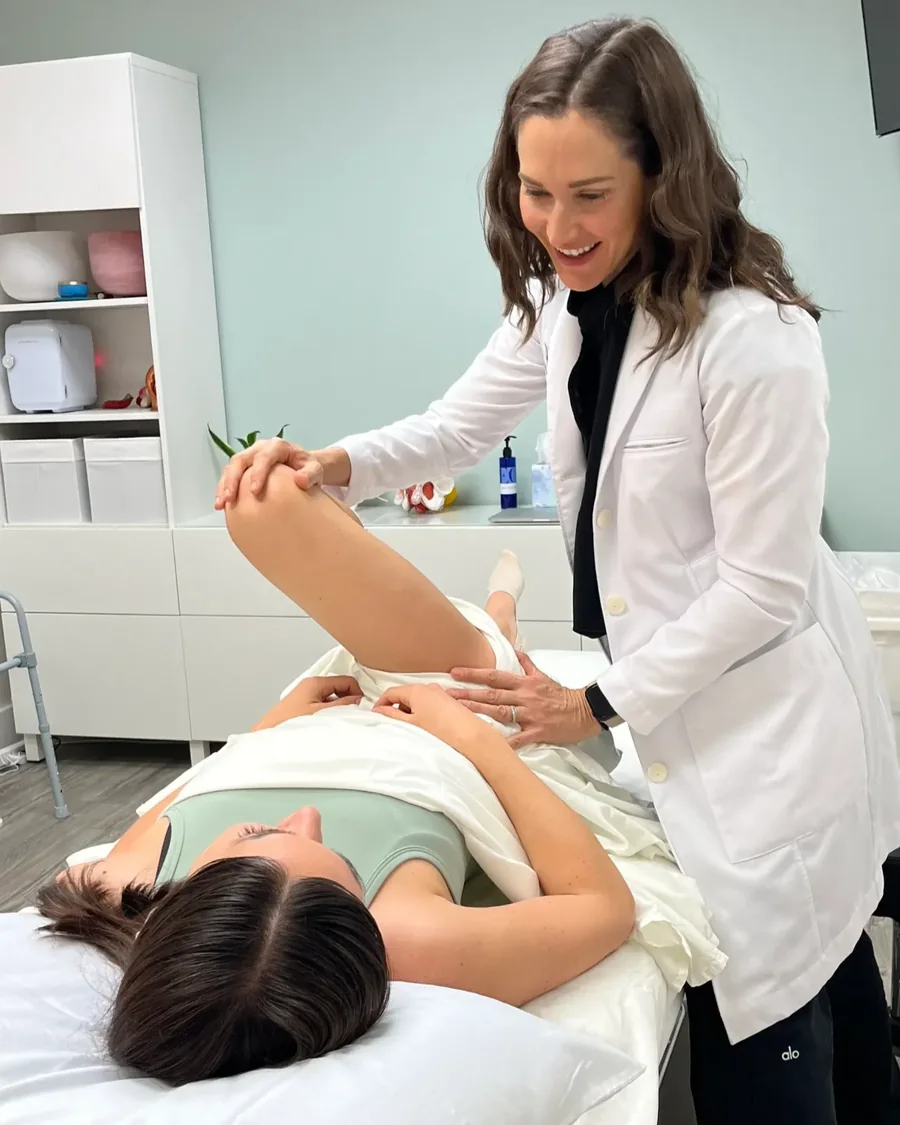
How physical therapy in Hollywood helps.
Scar tissue responds to hands. That is the entire reason this work exists, and it is why a cesarean scar from eight years ago is still worth treating. Your therapist works directly on the incision and the layers beneath it, softening adhesions and giving the fascia back its glide, then desensitizing the numb or over-sensitive band above it so touch reads as normal again. Nerve glides settle the burning and the cramping. After that it becomes reconnection: teaching the deep abdominal wall and the pelvic floor to fire together, then loading them for the things that actually hurt now, getting out of bed without gripping, lifting a car seat, standing through a whole afternoon. General postpartum work sits alongside this, but the scar and the abdominal wall need their own specific attention, and that is what a cesarean makes different. Some techniques feel tender early on, and we say so rather than pretend otherwise. Sharp or intolerable pain is not part of it. You tell your therapist the moment something crosses that line and the technique changes. Nobody can promise you a date, and this page will not invent one. Most people notice change within a few weeks when they keep up the home program. If cost is what is holding you back, call (954) 842-3825 and ask for Ronda, who will walk you through what your visits will cost before you book anything.
What to expect from your recovery.
Evaluation
Your therapist examines the scar itself, how the tissue moves in every direction, where sensation is altered, and how the abdominal wall and pelvic floor handle pressure. Thirty to sixty minutes, one on one, private room, door closed. Everything is explained before it is done.
Scar and tissue work
Then hands-on work on the incision and the layers under it, plus desensitization of the numb or over-sensitive band above it. Nerve glides and myofascial release for the cramping and the burning. Gentle joint work for the hips, pelvis and low back that have been compensating for months.
Reconnect and load
Last, we rebuild the connection between breath, deep abdominals and pelvic floor, then load it properly. Getting off the floor, carrying a toddler, exercising again, and if another pregnancy is ahead of you, a trunk that is genuinely ready for it.
My wife and I can't thank Dr. Leslie enough for everything she's done for us.
Pain rarely travels alone.
Postpartum Recovery
Six weeks and cleared is not the same as recovered. This is the rest of it.
Pelvic Pain
Pain in the pelvis, groin or genitals that imaging keeps calling normal.

Constipation & IBS
When the pelvic floor will not coordinate with the bowel, nothing moves easily.