Constipation and IBS Treatment in Hollywood, FL
You have done the fibre, the water, the probiotics and the elimination diet, and you are still spending twenty minutes on the toilet and getting up unfinished.
What causes constipation and IBS?
Digestion ends in a muscle. The last few inches depend on the pelvic floor releasing at the same moment the rectum builds pressure, and if that timing is off, nothing you change upstream will fix it. That is how fibre, water and probiotics can all be sound advice and still leave you straining. So this page is about stool, straining and coordination, which is the part almost nobody has assessed.

To pass a stool, the pelvic floor and the anal sphincter have to let go at the exact moment pressure rises above them. In a lot of people that sequence has reversed, so they bear down hard while those muscles tighten and seal the exit. The result is a long sit, a stool that will not come, and a blocked feeling low down that no laxative touches. This is a timing fault, and timing can be retrained.
Straining feels like effort well spent and it works against you. Pushing against a closed floor drives pressure into the structures that support your pelvic organs, aggravates hemorrhoids, and irritates the anal tissue that then makes you brace harder next time. It also rehearses the very reflex we are trying to undo. Changing your position on the toilet, releasing the breath instead of holding it, and giving the urge a defined window are unglamorous changes that move the mechanics fast.
If stool arrives at the rectum hard and dry, even a perfectly coordinated pelvic floor will struggle with it. Slow transit, not enough fluid, some medications and meals eaten at random hours all firm it up. Irritable bowel syndrome can swing the other way too, sending loose and urgent stool that makes a drive up I-95 something you have to think about. What is arriving shapes what the muscles are being asked to do.
The urge to go is a reflex on a timer. Postpone it often enough, at work, on the school run, because the only toilet available is a public one, and the rectum stretches, the signal fades, and the stool sits longer and dries out further. Rebuilding a reliable window, usually within half an hour of a meal when the gut reflex is strongest, is one of the first things we set up with you.
Your gut runs its own nervous system, and it talks constantly to the one that handles your stress response. Sustained stress stalls or speeds up motility, raises sensitivity so ordinary gas registers as pain, and keeps the pelvic floor at a low clench all day without you noticing. Breath work and down-training are not a relaxation extra bolted onto the plan here. They are treatment aimed straight at that loop.
The bowel has to slide inside the abdomen to move its contents along. Scar tissue from a C-section, an appendectomy, a hernia repair or endometriosis surgery can tether those layers and limit that glide, and an abdominal wall braced against months of cramping does much the same. Hands-on work through the abdomen and around mature scars often improves the bloating and the emptying at the same time.
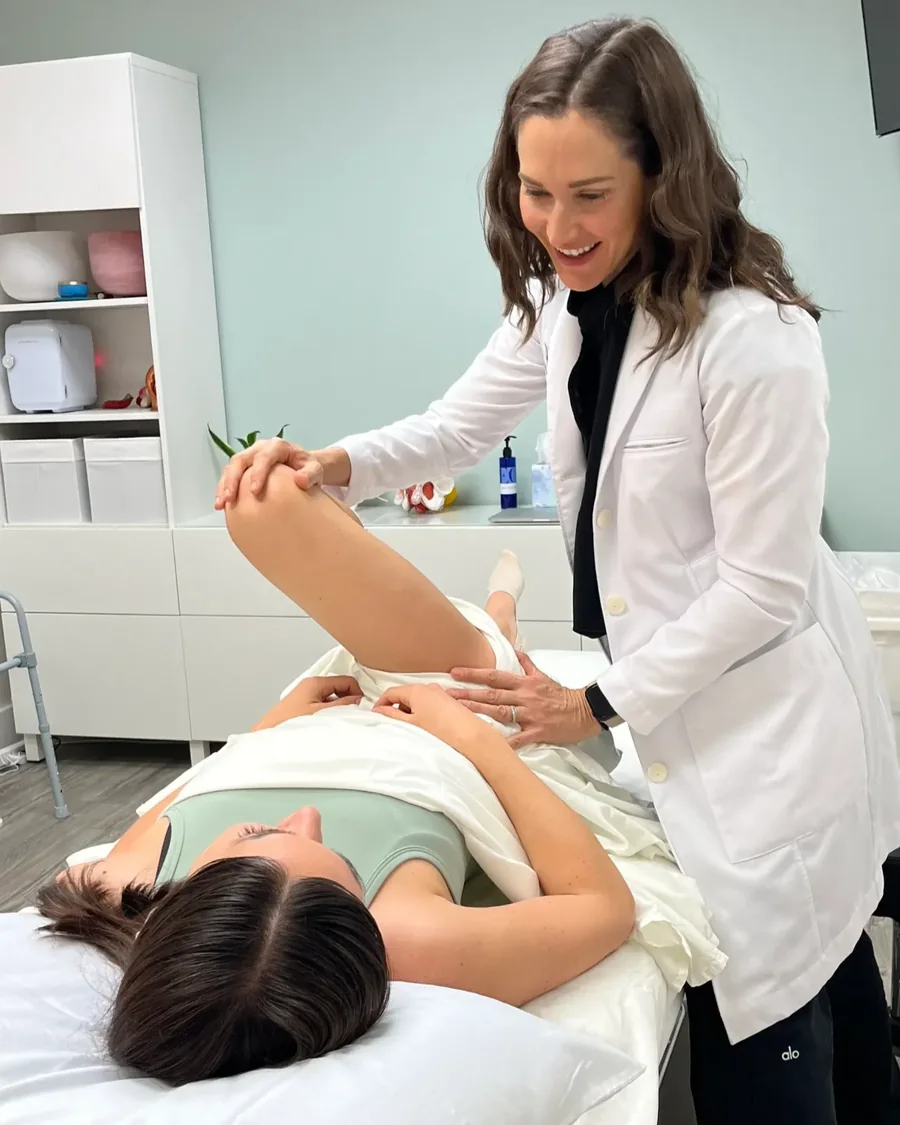
How physical therapy in Hollywood helps.
Most people arrive here after a gastroenterologist, a clean colonoscopy and a diet sheet. You do not need another referral to add this piece. Florida is a direct-access state, so you can book an evaluation with a licensed pelvic health therapist yourself, and it sits alongside your medical care rather than replacing it.
The evaluation looks at the whole chain: how freely your abdomen moves, your breathing, your posture over the toilet, what your stool is actually like, and whether your pelvic floor opens or grips when you bear down. Checking that last part accurately can involve an internal exam, because it is the only way to feel the coordination directly. Your therapist explains what she is assessing and why before anything happens, the door is closed, and you can decline or stop at any point. Consent keeps being asked for, not assumed.
Treatment then follows the finding. Hands-on work through the abdominal wall and around old scars to restore glide and ease bloating. Biofeedback so you can see the moment you tighten when you meant to release. Retraining the mechanics of a bowel movement, position, breath and timing, until it stops being an event. Then strength through the trunk and pelvic floor once the coordination holds. Bladder symptoms often travel with this, and our bladder and bowel dysfunction page covers that side.
What to expect.
Mapping the mechanics
We go through your history in detail, including the questions nobody has asked you yet about consistency, frequency and how long you sit there. Then a hands-on assessment of the abdomen, breathing and the coordination of the pelvic floor. You leave knowing whether this is a timing problem, a stool problem, or both.
Retraining the sequence
Then we teach the mechanics back. Position on the toilet, how to generate pressure without straining, how to release the floor on cue, with biofeedback where seeing it helps. Manual work eases the abdomen and the scar tissue. Most people notice a change within a few weeks when they keep the routine going at home.
Keeping the gut steady
Last we make it durable. A morning window that works with your schedule, breath and nervous system work for the stress side of flares, and strength through the trunk and pelvic floor so the pattern holds. You finish with a home program and a clear plan for what to do when a flare starts.
I have had the pleasure of working with both Dr. Leslie and Tanya who were both incredibly knowledgeable and always made me feel super comfortable.