Spotlight Series

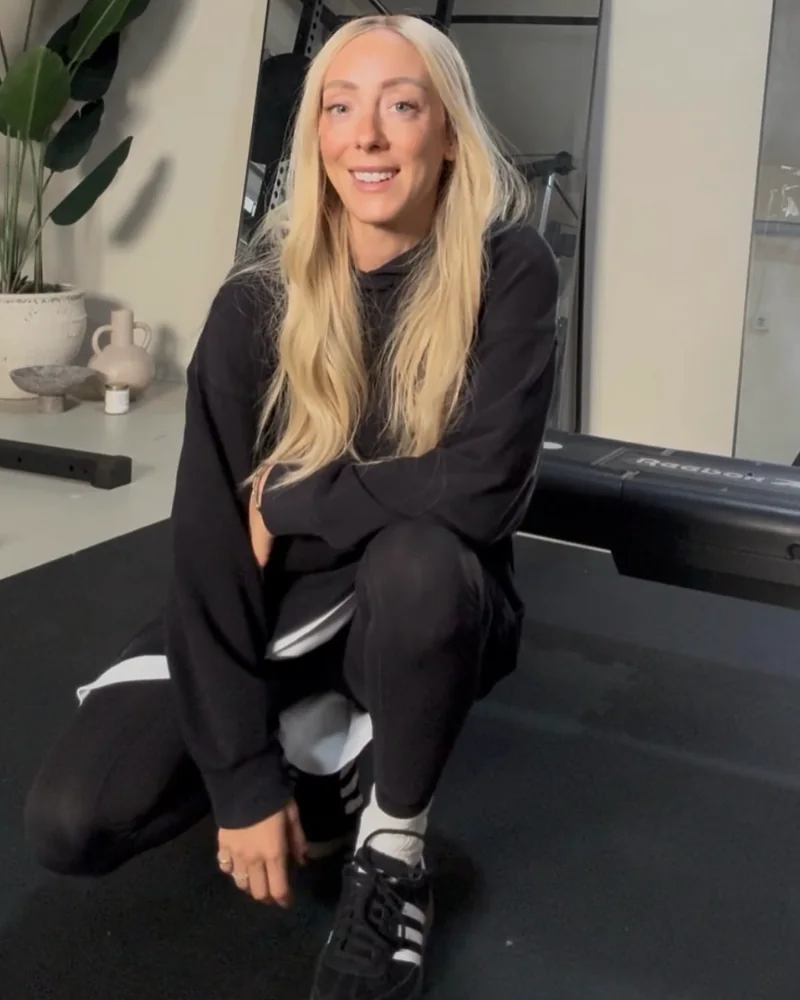
Interview with Ayelet Gottesman

Dr. Safa Maklad
Spotlight Series Topic: Strength Training for Women’s Health

Guest Name:Ayelet Gottesman

Guest Credentials:Personal Trainer and Women’s Health Coach

Discussion Details: In this episode, Dr. Leslie Wakefield, PT sits down with Ayelet Gottesman, a pelvic health and women’s health coach and personal trainer who is deeply passionate about helping women build strength from a solid foundation.

Ayelet shares her personal journey into this work—sparked by her own postpartum experience—and how it shaped her holistic, integrative approach to training. Together, we explore the powerful connection between pelvic health and strength training, and why addressing the body as a whole is essential for long-term health, confidence, and vitality.

This conversation covers:

  • Why many postpartum symptoms are often dismissed as “normal”—and why they shouldn’t be
  • The importance of building strength on a stable pelvic foundation
  • How resistance training supports hormone health, bone density, and longevity
  • Common fears around “bulking” and what actually happens when women lift weights
  • The role of collaboration between pelvic physical therapy and fitness coaching
  • How small symptoms can be an opportunity to transform overall health and quality of life

Ayelet brings a refreshing perspective—reframing challenges like pelvic floor dysfunction not as limitations, but as opportunities to rebuild stronger, more resilient bodies.

Benefit of Watching: Watching the Wellsprings Spotlight Referral Series gives viewers the opportunity to learn from trusted care partners who are deeply committed to whole-person, thoughtfully personalized care. Each conversation offers practical education, insight, and support while helping people better understand the resources available to them throughout different phases of health and healing.

Viewers benefit by:

  • Learning about specialized services and support they may not have known existed
  • Gaining a deeper understanding of pelvic health, wellness, and integrative care
  • Hearing honest, relatable conversations from experienced professionals
  • Feeling more empowered and informed about their own health journey
  • Discovering trusted local experts and collaborative care options
  • Building confidence in seeking support during vulnerable life phases like postpartum, recovery, or chronic symptoms

The series also helps humanize healthcare by highlighting not just what these professionals do, but who they are, why they care, and how collaborative relationships can lead to better outcomes and a stronger support system for patients and families.

Address of guest’s business:
3260 N 37th St Hollywood FL 33021

Dr. Leslie Wakefield: Hi, I’m Dr. Leslie Wakefield with Wellsprings Health and today in our spotlight series, I am with Ayelet Gottesman. She is a certified personal trainer and a mom of three boys, but the work that she does is a little bit different. She specializes in pelvic floor just like us, uh, hence the connect. She does a lot of pre and postnatal fitness. She works with parameopause and menopause, PCOS. She does a lot of corrective exercise and strength training. and you’re starting to see why we love her and why there’s a lot of overlap for our patients. Um, Ayelet, you are an avid proponent of resistance training for women as a foundation for health and um, I love that. I’m a big believer myself. Can you introduce yourself um, and tell us how you got into this?

Ayelet Gottesman: So, when I was six weeks postpartum, first of all, hello. Hi, and thank you for that awesome intro. Um, when I was about 6 weeks postpartum with my second, I basically had my six week postb birth post delivery checkup and I was told, “You’re good to go. You want to do jump roping, go do jump roping. You want to run, go run.” So, as somebody who had done yoga, even though I was in the process of getting certified for strength training, I just jumped back into kickboxing cuz why not? And I actually had zero gap and I opened up my my diastasis rect. I opened it up doing that and I developed all sorts of symptoms like pain with sexual intercourse, a lot of discomfort when I was going to the bathroom. And I was just wondering why that was the guidelines. Like why was I just checked and told I could do things without given any like even when they picked me up off the table after checking me, they picked me up with their arm and I crunched up without any coordination or anything. And I was like wondering like is is this you know is this a baseline or is there something that we could explore and you know help women who feel like they’re living with discomfort that’s normal because they had a baby like actually live a higher standard of life. So, I decided for myself because I couldn’t afford to get the help I needed and I didn’t have any resources that I would deep dive and that’s what led me to where I am right now.

Dr. Leslie Wakefield: So, you were studying it for yourself because you had your own issues and you didn’t else to go basically.

Ayelet Gottesman: No, I was actually told to drink a glass of wine before intercourse and that to try again, see what happens.

Dr. Leslie Wakefield: I thought I was going to stop hearing that 10 years ago, but but I still hear it.

Ayelet Gottesman: Listen, he just turned five. That specific kid had just turned five in December. So, we’re still And I’ve heard multiple people come in with the same stories. It’s just like this repeated tagline like you had a baby. That’s what happens, you know.

Dr. Leslie Wakefield: So, how do you describe your work then to people that ask? Cuz you’re a personal trainer. you do progressive resistive exercise and but you work with women women specifically for particular goals. How do you describe that?

Ayelet Gottesman: So, it’s a big melting pot, but I think that if you look at it in any way, like if you’re just doing strength training, then you’re kind of missing the point because the goal of strength training is to build the body and become strong. But if you’re building trying to build the body and the pelvic floor is dealing with all sorts of levels of dysfunction, and you’re totally neglecting that part of the body, you’re just going to build on like a very shaky foundation. You might end up even worse than before. That’s why I often send you guys clients because it’s sometimes it’s out of my scope and I’m like, “Okay, this is something that you need to see.” But there are some things that are within my scope that I could help with. So, I try to take a holistic approach to it. We do a lot of corrective exercise. I do postural assessments. I treat them nutrition also. And we try to treat the picture as a whole.

Dr. Leslie Wakefield: The holistic perspective.

Ayelet Gottesman: Pause. Did I even answer your question?

Dr. Leslie Wakefield: Yeah. I’m not pausing. That was great. Keep going.

Ayelet Gottesman: I was like, “Wait, did I go off? Was that the Could you repeat the question again?

Dr. Leslie Wakefield: It was perfect. How do you describe your work? And you totally answered it. Um, and it what I’m hearing, if I could repeat back to you, just to make sure I’m picking up what you’re putting down, is you are a personal trainer, meaning you take people through exercise within your scope. So, not necessarily pathology like we would see in physical therapy, but people with a particular set like a body, a whole a whole person body,

Ayelet Gottesman: whole body

Dr. Leslie Wakefield: is never perfect, right? We all have our issues, but the people you work with, you focus on women that have women’s specific issues and you take them through exercise, but with a whole person lens, and I say it that way because that’s the way we do it. So, that really resonates with me.

Ayelet Gottesman: Yeah.

Dr. Leslie Wakefield: Cannot dissect one system out of a person’s body. You can’t as far as we go, we you can’t just pelvis out, treat the pelvis, plug it back in, and say the person’s good to go.

Ayelet Gottesman: Wouldn’t that be nice?

Dr. Leslie Wakefield: That’d be great. That’d be so much easier. But no. Um, and then for me, you can’t just be like, “Okay, strap on a kettle bell. We’re going to build a glute.” Just

Ayelet Gottesman: right.

Dr. Leslie Wakefield: Maybe two if you want to, right?

Ayelet Gottesman: It doesn’t work that way,

Dr. Leslie Wakefield: which I do prefer. You’ve got to work with a whole person and a whole body. And I love the way you talked about a foundation. Having the pelvic floor is a foundation. And if you don’t have a solid core, and for me, the pelvic floor is part of the core, then you’re building on that shaky foundation.

Ayelet Gottesman: Yes. Exactly. I actually see a lot and this is something I’m sure that you’re also starting to see is a lot of women that are getting the sling surgery then and they’re getting the sling surgery and it’s like a band-aid that was put on the symptom but then 5 to 10 years later they come in they’re like I had sling and now I’m starting to leak again. I don’t understand because the system itself wasn’t necessary. There are certain circumstances where the sling is 100% necessary. But if you’re not going to treat and follow up with like understanding pelvic floor coordination, pressure management, fixing thoracic kyphosis or this way like then there’s going to be newfound pressure that’s going to continue that’s going to pop up eventually. You can’t just sew it up and call it a day. And I think that

Dr. Leslie Wakefield: can I put that in layman’s terms just for everyone trying to follow you on that because you’re so right. So a sling procedure, the one that you’re talking about is for a little bit of prolapse. It’s like to help lift up the bladder or the urethra. And that’s a lot of times given to women who have a little bit of leaking like with coughing or sneezing. And it can work because it’s changing the angle of the urethra and it’s offering a support. But right I think to your point the real question is why is that angle of support changed? Like what is happening with the pressure that’s coming down into the pelvis that’s making the the system leak a little bit? And if you don’t change that whole system that ended up causing the leakage, that little bit of support over time is probably or maybe going to wear out.

Ayelet Gottesman: Yeah.

Dr. Leslie Wakefield: It might not last as long. And so we love we love the sling if that’s necessary for the person, of course. But people I believe should be doing therapy first so that you know if it’s necessary because you might clear up all the problems without ever having to do a surgery and then if you do have surgery then come see us after. Right. Yes. So that we can make sure the surgery sticks and lasts and you don’t have to go back in again down the line, maybe when you’re older and less able to recover.

Ayelet Gottesman: But also when you have, and this is how I like to look at like all things related with any corrective exercise, postural deviations, pelvic floor issues, if you have this like almost like reason to come in and fix it, right? Pause. Right? Let’s let’s like figure everything out. Like why are you going to treat that one aspect? You have an opportunity now to rebuild and get the knowledge that you need and the help that you need to really live a long life with like a high quality of life feeling good and strong like you’re okay. So your your pelvic floor you’re leaking, right? This is an opportunity to build up your back muscles, your glute muscles, the whole posterior chain. You could be lifting like your grocery bags without help when you’re older just because of that silly little teeny tiny leak that didn’t really bother you so much but that you decided to look into. You know, it’s an opportunity. We’re build with by working with you by doing resistance training. I’m a huge fan of resistance training for women. They’re building bone density moving into menopause and beyond. We do think fall risk, right? Which is probably the number one fear, you know, of everyone past a certain age is what happens if I fall,

Dr. Leslie Wakefield: right? Yes. And

Ayelet Gottesman: and a valid fear if you’re not actively trying to

Dr. Leslie Wakefield: counter that,

Ayelet Gottesman: right?

Dr. Leslie Wakefield: And all of that can be a cardiovascular health, osteoporosis, fall risk. All of these things improve with exercise. And yes, a lot of women are intimidated to do resistance exercise because they’ve not been exposed to that before. So, I love the way you put that. Okay, let’s say you have a little bit of leaking, but can we use that to get started not just to fix the leaking, but really to rebuild the system with that strong foundation that we were talking about from the beginning and all the other benefits that women can reap from that.

Ayelet Gottesman: Exactly. And I think if you’re not looking at it from that angle, like if you’re not looking at as a whole, it can feel very like scary to inch into. But if you’re like, wait, this take a step back. This is such a huge opportunity to change my quality of life. It’s so exciting and it’s so much fun. Like I have so many people that come in and they’re so scared. They’re like permenopause or postmenopause. They’re so scared to like even hold like a 10 lb weight. And I’m like, your grandson is literally 50 lbs and you carry him. No problem.

Dr. Leslie Wakefield: Yeah.

Ayelet Gottesman: I’m like, this is going to be nothing. And then within a few months, they’re like so shocked. What? I’m deadlifting like 75 pounds. I never thought I could. And all of a sudden, the whole their whole lives change. Like the opportunities they have are all different. I could go on a hike. I could spend time with my grandkids. I can relate to more people. I don’t feel old. I feel young. I’m living a great life, you know? And it really changes how they even enter those pmenopause, postmenopause years. Their symptoms get like way reduced. That wasn’t English. Their systems reduce a lot. So try new. It comes and goes. Sometimes I’m like translating. Um, but yeah, it’s it’s it’s an awesome all of it is an awesome tool and when it’s all used together, it’s super powerful cuz you can’t put on muscle without knowing proper nutrition to support that, you know, and I feel like when you combine it as a whole, which you guys do a great job of doing is Yeah. amazing. You’re giving women freedom for the rest of their lives.

Dr. Leslie Wakefield: I love the way you reframed what could be a really scary problem and you turned it into such an advantage and that’s a wonderful perspective. I think that I don’t know how many patients agree or disagree or your clients agree or disagree but as an approach to life in general I think that’s quite lovely. says something about you.

Ayelet Gottesman: It’s It helps you kind of like take the fear out of what has to be done, you know, like also like even I’m sure you see this all the time when you’re doing the pelvic floor issues. You’re like you can’t look at it just the pelvic floor. So you’re looking like head to toe, right? And you’re like, “Oh, this is a little bit could be worked on. This could be worked on that.” And it’s like that’s so overwhelming. Like I have so many issues around but it’s like no cuz these little things all contribute to that one thing. And how exciting. We got to get strong at all those places. Also, you’re going to feel amazing by the time we’re done. You know,

Dr. Leslie Wakefield: you work on one and you’re working on the whole system. You can’t take a piece out. Anything we do to improve one area will carry over and overflow into everything else.

Ayelet Gottesman: Yeah.

Dr. Leslie Wakefield: All right. So, I’m going to play devil’s advocate for you and give you an opportunity to respond. Are you ready?

Ayelet Gottesman: Uh oh.

Dr. Leslie Wakefield: You’re talking a lot about building muscle and you clinicians are talking about all of the benefits of building muscle, but I don’t want to look too big. What do you say to

Ayelet Gottesman: Oh my god.

Dr. Leslie Wakefield: No, no, no. Real concern.

Ayelet Gottesman: It It totally is a real concern. It I I hear it because if I’m being honest with you, before I went into strength training, I was super concerned because I’m like the a little thin girl and what what am I going to look like when I put on muscle, you know?

Dr. Leslie Wakefield: like you are nobody know you are quite petite

Ayelet Gottesman: I’m very small yeah my my body weight percentage is crazy low because I have PCOS and I struggle to put on weight so by the way muscle when you hack the system with PCOS which is one of my biggest clonels and you figure out finally the formula to put on weight which I figured out all of a sudden putting on muscle equals better sleep better hormone regulation better everything so I would say number one for most people they have to be they have to decide that okay say I were to put on muscle right is a better quality of life like worth it or is it better to be miserable for the rest of my life that’s number one I had to get through that and decide I cannot live this way anymore like I have to get serious because I want to be playing with my kids when I’m older and I have goals and ambitions and I don’t know if I could do that if I don’t so that’s number one the mental factor but number

Dr. Leslie Wakefield: Do you know how hard it is to put on muscle? If it was that easy, we would all be jacked. Look at all the gym guys who spend years showing up and drinking what is it like gallons of milk and eat eggs with every milk. It you have to be so

Ayelet Gottesman: testosterone the women have access to by the way.

Dr. Leslie Wakefield: Also true. Also true. and many taking exogenous testosterone taking supplements

Ayelet Gottesman: also right

Dr. Leslie Wakefield: it’s not all kosher um but they those people work so hard it’s their whole lives like honestly even even me at one point it was like coming from I was I think I think I was 99 lbs when I started building muscle because my body would not put on weight unless it was muscle and it was my full-time job was putting on muscle like all I could think about was every two hours getting adequate amounts of and I was trying to bowl. Most people don’t have the time or energy to spend that much time during the day doing that. It’s not realistic. Yeah. And I think for women especially, we have this idea that if we lift the 10 pounds, it’s too heavy and I don’t want to build muscle. But to your point, all right, but we’re carrying the groceries and lifting our kids and the car seat and moving the furniture around all day long. And also I think people have the misconception that adding a little bit of muscle to resistance training will make them look bulky. And the reality is actually muscle is compact, right? Muscle is compact. And especially for women with our natural testosterone levels as they are, it’s going to be very difficult for most women to get bulky. Um, and muscle it’s more compact than fat. And through resistance training, you know, I explain to people, listen, you might look smaller actually, not

Ayelet Gottesman: literally

Dr. Leslie Wakefield: that’s not necess depending on the the goal of the person and why they’re working out, that may or may not matter to them, but it’s quite typical for a woman to bulk up um without really making it their full-time job and supplementing and doing all these other things.

Ayelet Gottesman: Yeah. And it’s funny because the most people what they say when they start putting on muscle at least like from the people that come into my gym and I would say with a highlight on the menopause women they all I would say 100% of them that’s a huge overstatement but the ones that really are following nutrition not trying to bulk just regular nutrition to put on muscle um all of them will say wow my clothes fit me so much better like I’m wearing a dress that I wore 5 years ago that I couldn’t fit into this year and it’s like big in certain parts and that’s with putting on muscle which is literally counter to the claims that you see everywhere about toning. But toning is low like leaner body fat and putting on muscle. It’s like what everyone wants. Don’t you want to feel good and look good? Don’t like Yeah. And basil resting metabolic rate which is like the amount of calories our bodies use just at rest goes up with more muscle mass. So, you know,

Dr. Leslie Wakefield: there you go.

Ayelet Gottesman: I I hate to tap into the aesthetic component, but that’s motivating to most of us to a certain degree. You will burn more fat by having more muscle. I mean, while you’re sleeping, you’ll be burning fat.

Dr. Leslie Wakefield: And I find that just sprinkling a little bit of that in really helps turn the tide for a woman who’s on the on the fence about like recognizing the health benefits, but it’s a lot of time. I mean, potentially because someone who’s never worked out before, the idea of training three hours a week. What Well, let’s go back to that before I make What do you recommend for resistance training to your clients as like a time investment that they would need to do?

Ayelet Gottesman: Is it at like uh from starting beginning let’s say or

Dr. Leslie Wakefield: let’s say you have somebody coming in they’ve never resistance trained in their life but they hit menopause their metabolism crashed their hormones are all over the place and they’re trying to build healthy lifestyle to move through menopause.

Ayelet Gottesman: So I would say as the starting point for resistance training should be at least three times a week. I don’t love putting an like a time on it. If they’re coming to me it’s by default an hour. Um, but I don’t like putting a time on it because it like you could finish your workout if you’re lasered in and focused in 45 minutes or an hour. I don’t really care as long as you lift it to failure. Um, so I like to say at least three times a week for starting. Um, and to divide it upper body, lower body, full body, and then as they progress, if they have more like athletic goals or specific aesthetic goals, when they’re like reaching that intermediate point, I would say sometimes a fourth like an extra session and divided a little bit differently. So, they end up being even shorter workouts four times a week.

Dr. Leslie Wakefield: For somebody that’s never exercised before, that can sound like a lot. Um, maybe to someone who, let’s say, did sports in high school, like, “Oh, girl, I used to train two hours a day, five days a week. That’s nothing, right?”

Ayelet Gottesman: Everybody, everybody’s coming from a different place.

Dr. Leslie Wakefield: And I think noting all of the benefits of resistance training, including the aesthetic, including the health, including mental health, um, all of that’s important depending on, you know, who it is that we’re suggesting it to,

Ayelet Gottesman: right? But, you know, it’s funny. My favorite favorite clients that I have are all perry menopause/menopause because they first of all, they do have more time on their hands. They’re not running after little kids, but they are super super motivated. They’re like, “Three hours, that’s it.” Of course, I was at doing Pilates an hour every day or I was at I was running an hour every day and now you’re telling me it’s it’s so much less time. But also, they are feeling the effects of not doing it. And they’re like, “Wait, wait, wait. We need to we need to get serious now. Now it’s time to get serious. Everything like I’m here. I’m lasered in. I’m focused. Whatever you need for me, I will do.” It’s a big shift.

Dr. Leslie Wakefield: It’s better to do it now than later. So you mentioned that population being like after the running around after kids years, but I know you also do a lot of work pregnancy and postpartum.

Ayelet Gottesman: Yes.

Dr. Leslie Wakefield: So what is what does that look like? How is that different?

Ayelet Gottesman: So it’s a little trickier because not everybody has the time that they need to do it, right? And recovery looks different. But when I have people that come in, first of all, I always have a client assessment where I’m able to like a pelvic floor intake assessment where I’m intake form where I’m able to basically like scan and screen for anything that I think they might need to see you for, which is why I end up referring a lot of people to you.

Dr. Leslie Wakefield: Specifically, you you’ve literally told me, listen, they came for training, but I’m not going to proceed until they’ve been cleared by pelvic.

Ayelet Gottesman: Yeah.

Dr. Leslie Wakefield: So, you’re very careful in that way.

Ayelet Gottesman: Yeah. Honestly, there’s things that are in my scope and then there’s things that are way out of my scope. And then there’s things that I’m not comfortable even like engaging with until I know from you that it’s a safe green light cuz some things you can only see from an internal assessment which I I don’t do.

Dr. Leslie Wakefield: Yeah.

Ayelet Gottesman: So, it’s very important to be able to be open to that and sending people because you’re not going to do them a justice by like pretending you can help them even though or thinking you can help them without getting concrete like data.

Dr. Leslie Wakefield: Resistance training is can be intense. It’s a load on the body. There’s a there’s a concept in exercise called persist uh progressive overload. Meaning you have to you know this I’m just talking to the people listening continuously carefully thoughtfully but overload the system just a little bit to get it to respond. So it’s a stimulus response of progressively overloading. And if there is a medical issue or something else going on, you really want to know about that so you can tailor a routine around it or get it taken care of first.

Ayelet Gottesman: Yeah. So that’s the number one most important. Also, usually with my C-section girls, I’ll I’ll request also that they go and check just in case because even just like the adhesion stuff, that’s out of my scope. So I’d like you to look at that usually. Um, but for the ones that don’t flag for anything specific, and they might flag for symptoms that can align with like being having a weaker pelvic floor or having a tighter pelvic floor, um, what what the session would look like would be like 30 minutes of breathing. I have four different breathing progressions that I do with them. A little bit of core work. It progresses it progresses as we continue. And then 30 minutes is strength training with a mix of corrective exercise because I also do postural assessment. So, I plug in the the postural stuff into the corrective exercise to strengthen and help support their healing through postpartum and and through pregnancy and postpartum so that they could feel like really good and actually get progress.

Dr. Leslie Wakefield: Yeah, I love that. That sounds amazing. Sign me up. I’m coming. Put me on your I need half an hour breathing and corrective exercise for sure.

Ayelet Gottesman: I know. It’s it’s actually a fun combination cuz it’s not they don’t leave so depleted even though they are lifting to failure because the 30 minutes first of all most of the breath work as you know the diaphragmatic breathing it stimulates the vagus nerve so it promotes a sense of calm it helps build lung capacity there’s so many benefits they’re getting like a big bang for their buck and they get to rest you know it’s hard being a new mom it’s hard being pregnant

Dr. Leslie Wakefield: all right so um what else put a bow on it wrap this up for me anything else you want to share about yourself or your work that you do with women.

Ayelet Gottesman: So I I think in general looking at the women body as a whole including like hormones training for you know different like p PCOS Hashimonos menopause pmenopause like taking advantage of where your hormones are at in order to build for the future longevity building a strong foundation that’s not shaky taking a few steps back before jumping into the few steps forward makes all the difference in the world. And um that’s the approach I also I always love to take. And honestly, I’m not promoting myself. I’m more over promoting you than me here. But it’s expensive sometimes. But the cost of not getting seen postpartum or when you’re pregnant or after is so much more expensive than going in and taking care of yourself. I know moms, we all have tight budgets, but that little, you’re not going to remember that amount that was spent towards you feeling better, but your kids will feel it long run and now. And you will feel it. And everyone benefits from just giving themselves that little present and just pausing and doing it in the moment instead of waiting until there’s a real problem that’s way more costly and hurts and and took away years of your life 10 years later.

Dr. Leslie Wakefield: Yeah, absolutely. the ounce of prevention being worth so much more.

Ayelet Gottesman: Yeah. And also you learn more about like we weren’t taught about our bodies. We were taught biology, but we weren’t taught about our bodies. And going through this journey teaches you so much about your body. And I’m truly wish it upon everyone.

Dr. Leslie Wakefield: Thank you very much. Well, I’m going to include um access to you in the notes and um any links you want to share, I’ll make sure to include that. Thanks so much for your time. I’m sure I’ll be talking to you soon.

Ayelet Gottesman: Oh, yeah. Thank you for having me.