Spotlight Series
Interview with Dr. Andrea Orvieto
Spotlight Series Topic: Inside Women’s Health Acupuncture
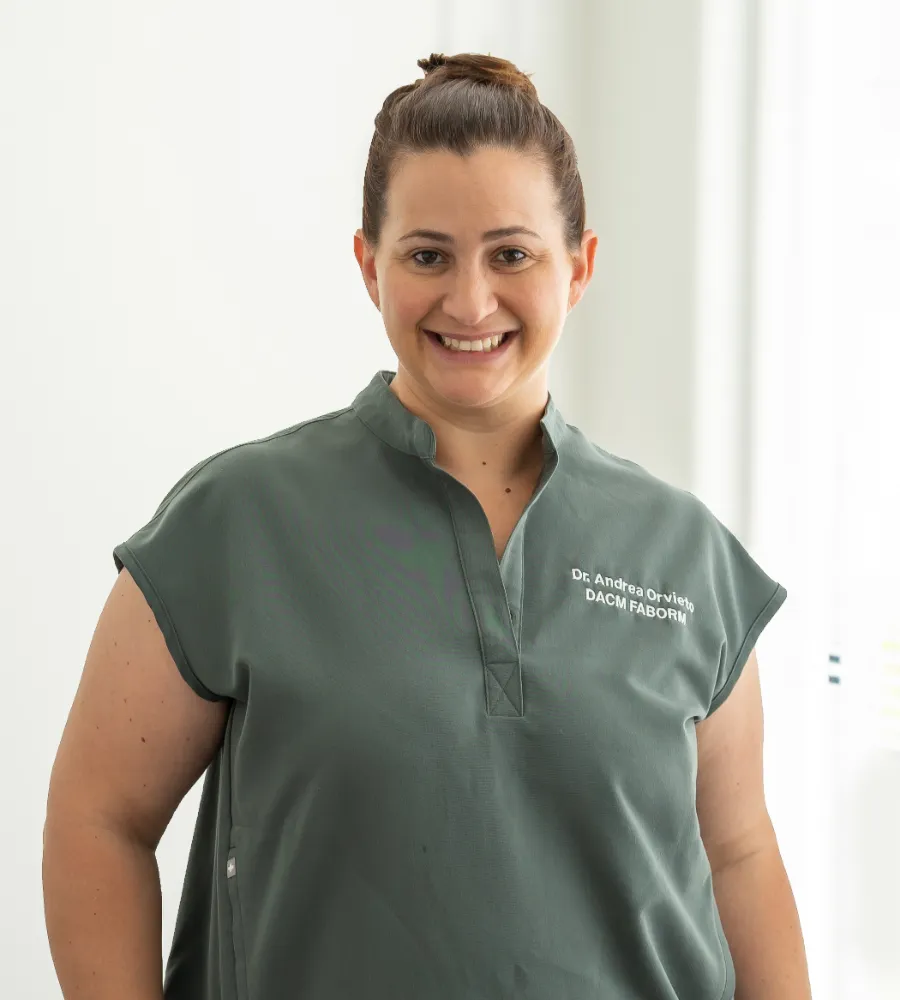
Guest Name: Dr. Andrea Orvieto
Guest Credentials: Licensed Acupuncturist (L.Ac.) with a Doctor of Acupuncture and Chinese Medicine (DACM) and a certified Fellow of the American Board of Oriental Reproductive Medicine
Discussion Details: In this Spotlight Series conversation, Dr. Leslie Wakefield sits down with Dr. Andrea Orvieto to explore the role of acupuncture in fertility, women’s health, and whole-body wellness. Dr. Orvieto shares her journey from a background in chemistry to building a thriving acupuncture practice, and explains how her work supports patients through fertility challenges, pregnancy, postpartum recovery, and pelvic floor health. The discussion highlights how acupuncture fits into a collaborative care model alongside OB-GYNs, reproductive endocrinologists, and physical therapists, while also breaking down how acupuncture works in simple, relatable terms.
Benefit of Watching: Viewers will gain a deeper understanding of how acupuncture can complement traditional medical treatments—especially for fertility and women’s health concerns—while also learning practical insights they can apply to their own wellness routines. This episode offers valuable education for patients navigating IVF or hormonal health issues, as well as anyone curious about integrative care. You’ll also walk away with a better appreciation for multidisciplinary healthcare, plus simple self-care strategies like acupressure and lifestyle habits that can support stress relief, sleep, and overall balance.
Address of guest’s business:
400 S Dixie Hwy Suite 6, Hallandale Beach, FL 33009
Hi, I’m Dr. Leslie and welcome to Well Springs Health, our spotlight series.
Today I’m with Dr. Andrea Orvietto, and we’re talking about her acupuncture practice here in the Hollywood Hallandale area. She has been in the community for almost 10 years and is a specialist in fertility work—something that’s really interesting to a lot of our patients, fertility and women’s health. Andrea, welcome. Thank you for talking to us.
Thank you so much. I’m so excited to be here.
Can you tell us about your background—what led you into acupuncture and what it’s been like building your practice for almost a decade now?
When you say it like that, it’s kind of scary, right? It’s like, wow, that’s a long time. So, my background—I have an undergrad degree in chemistry. While I was in school, I wasn’t exactly sure what I wanted to do. Initially, I wanted to do research, but as I was getting ready to graduate, I realized that I wanted to be with people and not behind a lab forever.
So I took a little bit of time off and worked in between. I was a school teacher and I didn’t really know what to do. But to rewind—before I started college, I used to get acupuncture regularly because I suffered from recurrent urinary tract infections. The only thing that actually helped me get better was finally seeing an acupuncturist and a Chinese medicine doctor.
He was straight from China, barely spoke any English, and so younger me thought you had to be from China to practice this medicine—so I never even considered it.
While I was teaching, I was trying to figure out how I wanted to help people. I always knew I wanted to do that. I started a dietetics program at FIU, but realized it wasn’t for me. Then a cousin of mine in San Diego told me, “You can go to school for acupuncture—and there’s a great school here.”
That was in March 2012, and six months later I was living in San Diego. My now-husband and I met there. We’re both from South Florida, so after finishing school, we moved back closer to family.
I spent a year finishing my doctorate in acupuncture and Chinese medicine while working at a physical therapy office. At that point, I realized I didn’t want to only treat pain, which is what we focused on there. So I left.
When you first get out of school, you want to help everyone and everything—until something really hits home. I was initially told not to focus on fertility or women’s health because it’s too much pressure. So I avoided it—until I got my first fertility patient. After that, I never looked back.
Now, I still treat other things, but I primarily focus on fertility, women’s health, perimenopause, menopause, pregnancy, and postpartum care. A few years ago, I also dove deeply into pelvic floor health.
I have a close colleague who is both a physical therapist and acupuncturist who created a pelvic floor course. I believe any acupuncturist working in women’s health needs to understand the pelvic floor. I also earned a fellowship in reproductive medicine, and most of my patients fall into those categories.
How does that overlap with other clinicians like physical therapists or reproductive endocrinologists?
I truly believe in collaboration. The patient is the center of care, and no single modality is enough. Most of the time, treatment should be multidisciplinary.
I collaborate often with OB-GYNs and fertility specialists. Not all fertility patients undergo assisted reproductive therapies, but many still require testing and monitoring. While I can order blood work, I prefer working with other practitioners.
There’s often a communication gap in large fertility clinics, and I help patients understand their treatment and ask the right questions.
With physical therapy, they can do internal pelvic work, which I cannot. But acupuncture can support emotional and physical aspects, including muscles connected to the pelvic floor—like the abdomen, back, glutes, and thighs.
I also collaborate with chiropractors. A multidisciplinary approach is the best approach.
What does acupuncture actually do?
Acupuncture is both a science and an art. I like to explain it this way: think of your body as a system of highways and streets. When there’s a blockage—like a traffic jam—it affects everything. Acupuncture needles act like clearing that blockage so the system can function properly again.
Your body is naturally able to heal, but sometimes something is “stuck.” Acupuncture helps restore that flow.
People often think of acupuncture as alternative medicine, but it’s actually a complete medical system with thousands of years of history—and growing scientific research supporting it.
There’s increasing research showing benefits for fertility, endometriosis, inflammation, and PCOS. Chinese medicine includes acupuncture, herbs, and other modalities.
Patients often say they don’t believe in acupuncture, and I tell them—they don’t need to. It works regardless.
What can people do at home?
Acupressure is a great option. For example, there’s a point on the wrist used for nausea (like motion sickness bands).
For stress, a good point is Heart 7—located near the wrist. Another is at the top of the head (Du 20), which helps with calmness and clarity.
For headaches and irritability, a point between the thumb and index finger works well.
Ear seeds (small stickers placed on the ear) can also help regulate the nervous system.
Nutrition is also important. In Chinese medicine, we focus on warming foods—like soups, stews, and cooked vegetables—rather than raw foods, which can stress digestion.
What do you do for self-care?
I work out regularly—that’s essential for me. I also see a chiropractor and get massages monthly. I’m very selective about who I allow to treat me because energy transfer is real.
I also prioritize sleep. As a mom of two, I didn’t realize how much poor sleep affected me until recently. Now I focus heavily on quality sleep.
Acupuncture can also help with sleep. Many patients fall asleep during sessions because it activates the parasympathetic nervous system and releases endorphins and serotonin.
Thank you so much for your time.
Thank you. I love what I do, and I know you do too. It’s important for people to understand that while this is our profession, we do it because we truly care and are passionate about helping others.